A home plumbing maintenance checklist is a systematic schedule of inspections, tests, and upkeep tasks that keeps your pipes, fixtures, drains, and valves working properly year-round. Preventive maintenance, the industry term for this practice, costs far less than emergency repairs. Reactive plumbing repairs are statistically more expensive and disruptive than scheduled preventive visits. Think of your checklist as an insurance policy: a small investment of time each month protects you from burst pipes, water damage, and sky-high repair bills.
1. What does a home plumbing maintenance checklist cover?
A complete checklist for plumbing upkeep covers four time frames: monthly, seasonal, quarterly, and annual. Each layer catches different problems at different stages. Monthly checks catch small leaks before they become floods. Seasonal prep protects pipes from freezing or sediment buildup. Quarterly and annual inspections target the components that fail slowly and silently.
The checklist also covers every major system zone: kitchen, bathrooms, laundry, water heater, outdoor faucets, and the main shutoff valve. Skipping any zone leaves a gap. A common tenant plumbing complaint often traces back to a zone that nobody checked for months.
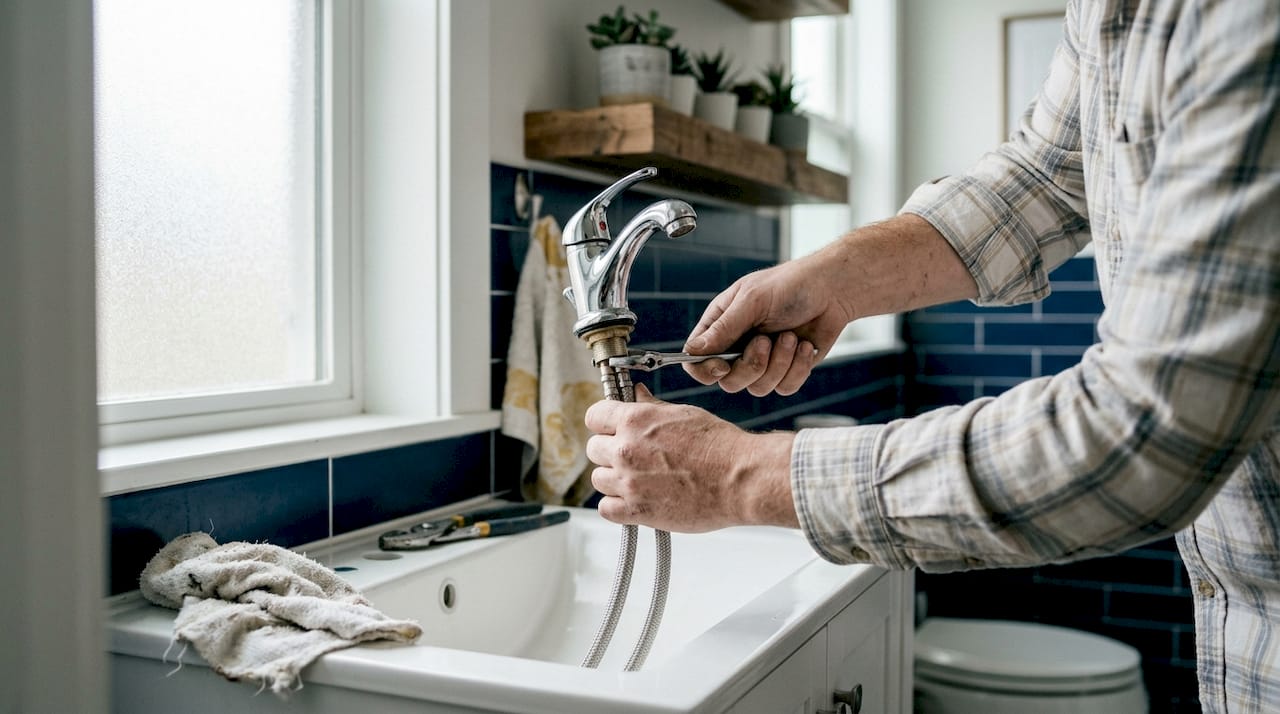
2. Monthly plumbing tasks every homeowner should do
Monthly routine checks under sinks, around toilets, and at visible pipes help uncover leaks and prevent sewer gas from entering your home. Consistency in these small checks prevents big plumbing surprises. Run through this list once a month:
- Check under every sink for moisture, staining, or soft cabinet floors. These are the first signs of a slow drip.
- Test drainage speed in all sinks, tubs, and showers. A slow drain signals a partial clog forming, not a full blockage yet.
- Clean faucet aerators and showerheads. Mineral deposits restrict flow and force your fixtures to work harder.
- Run water in rarely used fixtures. Guest bathrooms, basement sinks, and utility tubs need water flow to keep the P-trap wet. A dry trap lets sewer gas into your home.
- Inspect toilet bases and supply lines for any dampness or discoloration on the floor.
- Listen for running water when no fixture is in use. Constant sound from a toilet tank points to a worn flapper.
Pro Tip: Test every shutoff valve under sinks and behind toilets every six months. Valves left untouched for years can seize and become useless during an emergency. Turn each valve off and back on to keep it moving freely.
3. How to prepare your plumbing system seasonally
Seasonal plumbing prep is the part of a home plumbing guide that most homeowners skip until something goes wrong. Two seasons demand the most attention: fall and spring.
Fall preparation
- Disconnect and drain all garden hoses before the first freeze. Water left in a connected hose can back up into the pipe and crack it.
- Insulate exposed pipes in unheated spaces like garages, crawl spaces, and exterior walls to prevent freezing damage.
- Shut off and drain outdoor faucet supply lines if your home has interior shutoffs for them.
- Clear leaves and debris from any exterior drain grates before fall rains arrive.
Spring preparation
- Inspect irrigation systems and outdoor hose bibs for cracks or leaks that developed over winter.
- Flush your water heater to remove sediment that settled during the heating season.
- Check all exposed pipes for signs of frost damage: small cracks, bulges, or moisture stains.
- Test sump pump operation before spring rains. Pour a bucket of water into the pit and confirm the pump activates.
Pro Tip: Add shutoff valve testing to your seasonal prep checklist. Cycling each valve twice a year keeps the mechanism from seizing. A valve that won’t close during a pipe burst is the same as having no valve at all.
4. Which components need quarterly and annual inspections?
Some plumbing problems develop slowly over months. Quarterly and annual checks catch what monthly walkthroughs miss.
Quarterly tasks
Flush the water heater. Sediment flushing is a simple 15-minute task that improves heating efficiency and prevents tank failure over time. Attach a hose to the drain valve, run it to a floor drain, and flush until the water runs clear.
Test water pressure. Weak or inconsistent water pressure signals hidden leaks or a failing pressure regulator. Normal residential pressure runs between 40 and 80 PSI. A gauge from any hardware store gives you a reading in seconds.
Check for silent toilet leaks. A worn toilet flapper silently drains treated water and drives up your bill. Drop a few drops of food coloring into the tank. If color appears in the bowl within 10 minutes without flushing, the flapper needs replacing.
Annual tasks
| Component | What to inspect | Action if needed |
|---|---|---|
| Water heater | Anode rod condition, sediment level | Replace rod every 3–5 years; flush tank |
| Visible pipes | Corrosion, discoloration, moisture | Call a plumber for pipe replacement |
| Hose connections | Washing machine and dishwasher hoses | Replace rubber hoses every 5 years |
| Main shutoff valve | Full open and close function | Lubricate or replace if stiff |
| Fixture supply lines | Braided steel or plastic condition | Replace cracked or bulging lines |
When to call a professional: Water pressure below 40 PSI, visible pipe corrosion, or a main shutoff valve that won’t fully close all require a licensed plumber. Understanding how plumbing vents work also helps you recognize when gurgling drains or slow fixtures point to a vent blockage rather than a clog.
5. Common plumbing maintenance mistakes to avoid
Most plumbing damage from homeowners comes from a short list of repeated mistakes. Knowing what not to do protects your pipes as much as knowing what to do.
- Using chemical drain cleaners regularly. Harsh chemical cleaners corrode pipes and damage fixture seals over time. Use a drain snake or enzyme-based cleaner instead.
- Ignoring slow drains. A drain that takes 30 seconds to clear is already partially blocked. Waiting until it stops completely makes the fix harder and more expensive.
- Skipping shutoff valve tests. A valve that has not moved in years will seize. You will discover this only when you need it most.
- Leaving garden hoses connected in fall. This single mistake causes more frozen pipe calls each winter than almost any other oversight.
- Not logging maintenance. Without a written record, you cannot track when you last flushed the water heater, replaced a hose, or tested the pressure.
“Preventive maintenance should be viewed as an insurance policy that safeguards homeowners from expensive emergency repairs and water damage. Scheduling regular checkups costs a fraction of what a single burst pipe or water heater failure will run you.”
The fix for most of these mistakes is simple: set a calendar reminder, keep a maintenance log, and treat your plumbing system the same way you treat your car. You would not skip oil changes and wait for the engine to fail.
Key takeaways
A consistent preventive maintenance schedule is the single most effective way to protect your home’s plumbing from costly failures.
| Point | Details |
|---|---|
| Monthly checks catch early leaks | Inspect under sinks, test drains, and run unused fixtures every month. |
| Seasonal prep prevents freeze damage | Disconnect hoses in fall and flush the water heater each spring. |
| Quarterly flushes extend water heater life | A 15-minute sediment flush improves efficiency and prevents tank failure. |
| Silent leaks waste water and money | Use the food coloring test quarterly to catch worn toilet flappers early. |
| Shutoff valve testing is non-negotiable | Cycle every valve every six months so it works when you actually need it. |
What 15 years of plumbing calls taught me about prevention
Most homeowners call a plumber after something breaks. That pattern is understandable, but it is the most expensive way to manage a plumbing system.
The homeowners who spend the least on plumbing over time are the ones who treat their checklist like a monthly habit, not a crisis response. They know where their main shutoff valve is. They flush their water heater without being reminded. They replace washing machine hoses before they burst. These are not complicated tasks. They take less than an hour a month combined.
The biggest misconception I see is that DIY maintenance and professional help are opposites. They are not. Monthly walkthroughs are absolutely something you handle yourself. But annual inspections, pressure testing, and anything involving the main line or water heater connections benefit from a trained eye. The goal is not to do everything yourself. The goal is to catch problems early enough that you have options, not emergencies.
One more thing: write it down. A maintenance log is the most underused tool in home ownership. When you know the last time you replaced a supply line or tested the pressure, you make better decisions. Without that record, you are guessing.
— Matt
Mysticvalleyservices is ready when your checklist needs backup
Keeping up with a plumbing maintenance schedule is straightforward until something falls outside your comfort zone. That is where Mysticvalleyservices steps in.
Mysticvalleyservices provides plumbing and heating services across Massachusetts, including leak detection, water heater flushing, shutoff valve testing, and full system inspections. Local homeowners trust the team for both routine checkups and repairs that go beyond DIY. Whether you need a professional plumbing inspection or want to address a specific concern before it becomes a bigger problem, Mysticvalleyservices has the experience to handle it. You can also review common plumbing issues that professional maintenance prevents before booking your visit.
FAQ
What is a home plumbing maintenance checklist?
A home plumbing maintenance checklist is a scheduled list of inspections and tasks covering pipes, fixtures, drains, valves, and the water heater. It organizes monthly, seasonal, and annual upkeep to prevent leaks, clogs, and system failures.
How often should I flush my water heater?
Flush your water heater at least once a year, ideally each spring. Sediment flushing is a 15-minute task that improves efficiency and extends the life of the tank.
How do I detect a silent toilet leak?
Drop food coloring into the toilet tank and wait 10 minutes without flushing. If color appears in the bowl, the flapper is worn and needs replacing.
Why should I avoid chemical drain cleaners?
Chemical drain cleaners corrode pipes and damage seals, especially in older plumbing. Enzyme-based cleaners or a drain snake are safer and equally effective for routine maintenance.
When should I call a plumber instead of doing it myself?
Call a licensed plumber when water pressure drops below 40 PSI, you see pipe corrosion, or your main shutoff valve will not fully close. These issues go beyond routine maintenance and require professional diagnosis.