A manifold plumbing system is defined as a centralized distribution hub that routes individual water lines directly to each fixture in your home, giving you precise control over every faucet, toilet, and shower. Unlike traditional branch plumbing, which splits water through a series of shared pipes and hidden tee fittings, a manifold system sends a dedicated uninterrupted line to each outlet. This design complies with IPC Section 604 and IRC P2903 standards for residential water distribution. The result is better pressure, fewer hidden leaks, and repairs you can handle without shutting off water to the entire house.
What is a manifold plumbing system and how does it work?
A manifold plumbing system works through a home-run piping design. Each fixture gets its own dedicated line running straight from the central manifold hub, with no shared branches along the way. That hub sits in a utility closet or mechanical room and acts as the command center for your entire water supply.
The manifold hub functions like an electrical breaker box, but for water. Each port on the manifold connects to one fixture and has its own labeled ball valve. You can shut off the kitchen sink without touching the bathroom. You can isolate the washing machine without cutting water to the rest of the house.
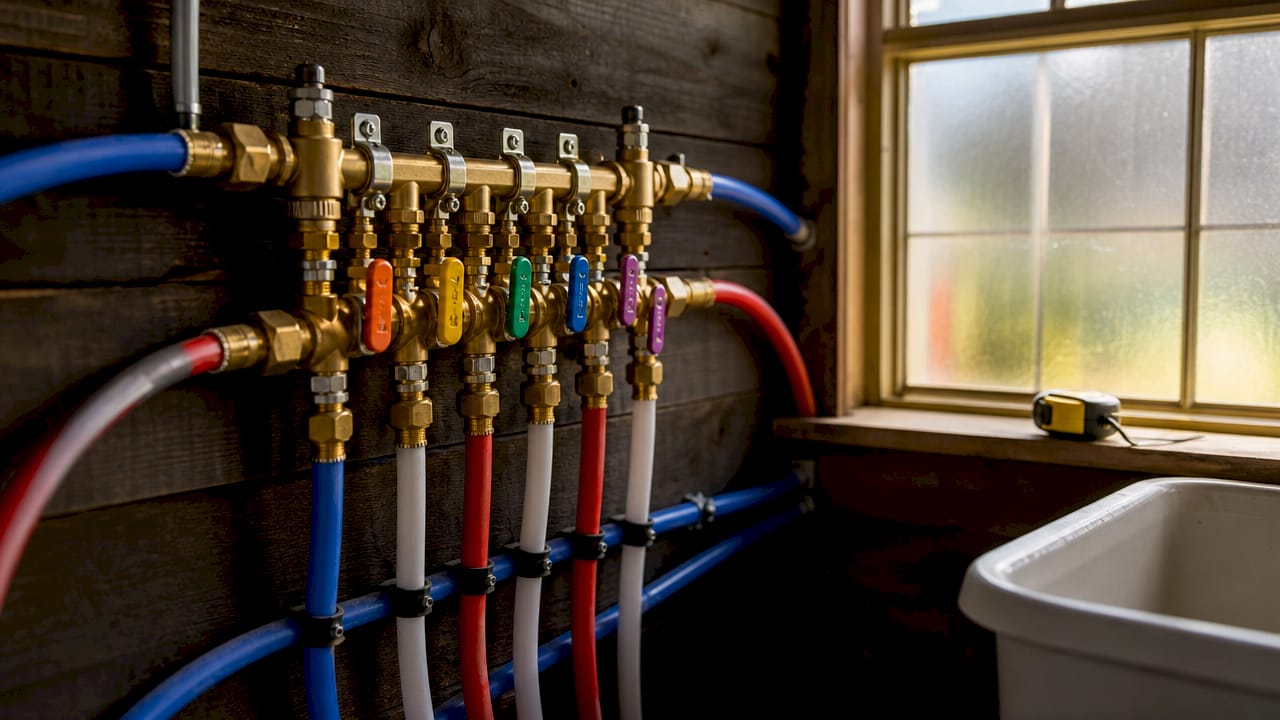
Most residential manifold systems use a dual manifold setup, one for hot water and one for cold. Each side carries labeled ball valves for independent control of hot and cold supply to every fixture. That level of organization is something traditional plumbing simply cannot match.
Key features of the home-run design:
- Dedicated lines per fixture: No shared branches means no pressure competition between fixtures.
- Central manifold location: Typically mounted in a utility closet, basement, or mechanical room for easy access.
- Individual ball valves: Each valve is labeled so you know exactly which fixture it controls.
- No hidden joints: All connections occur at the manifold or at the fixture itself, never behind a wall or under a floor.
Pro Tip: Label every valve on your manifold the day it is installed. A simple piece of tape and a marker takes two minutes and saves you serious time during any future repair.
What are the main benefits of using a manifold plumbing system?
The biggest benefit of a manifold system is individual fixture control. Fixture maintenance no longer requires shutting off water to the entire home. That single advantage is the primary reason plumbing professionals recommend manifold systems for new builds and renovations alike.
Pressure consistency is the second major win. Traditional trunk-and-branch systems lose pressure every time a tee fitting splits the flow. A manifold system eliminates shared branches entirely, so your shower does not lose pressure when someone runs the kitchen faucet at the same time.
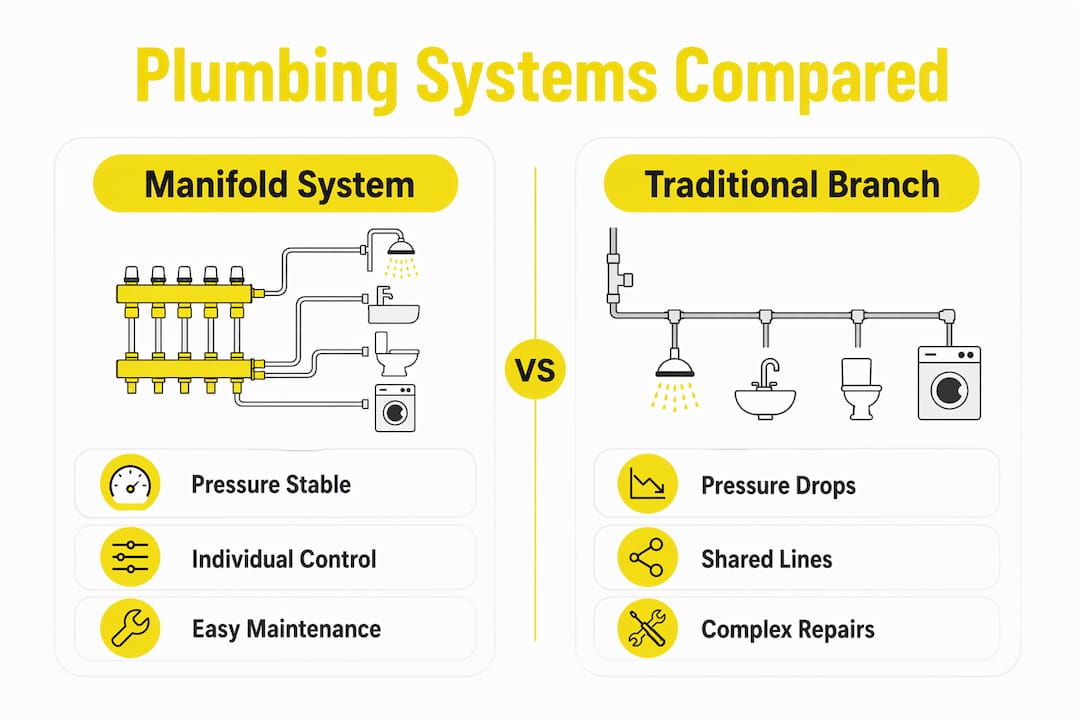
Leak risk drops significantly with a manifold layout. Because all fittings occur at the manifold or at the fixture, there are no concealed joints behind drywall or under flooring. Experts confirm that removing hidden connections drastically reduces the risk of catastrophic water damage from undetected leaks. That protection alone justifies the investment for most homeowners.
Here is a summary of the core benefits:
- Pressure consistency: Each fixture gets its own supply line with no pressure drop from shared branches.
- Individual shutoff: Repair one fixture without disrupting the rest of the home.
- Reduced leak risk: No hidden joints behind walls or floors means fewer undetected leaks.
- DIY-friendly repairs: Isolating a fixture is as simple as turning one labeled valve.
- Flexible tubing: Smaller-diameter PEX tubing is easier to route through walls and floors than rigid copper pipe.
How do manifold plumbing systems comply with plumbing codes and safety standards?
Manifold plumbing installations must meet two primary residential codes: IPC Section 604 and IRC P2903. These standards govern how water distribution systems are designed and installed in homes across the United States. Compliance is not optional. Any manifold system that does not follow these codes creates liability for the homeowner and the installer.
Material certification is equally non-negotiable. Every component that contacts potable water must carry NSF/ANSI 14 and 61 certification. NSF/ANSI 14 covers the mechanical performance of plastic piping components. NSF/ANSI 61 covers health effects, confirming that materials do not leach harmful substances into drinking water. Strict adherence to these certification standards is critical in any manifold system design.
Steps to confirm code compliance before installation:
- Verify local code requirements. IPC and IRC are model codes. Your Massachusetts municipality may have amendments that add requirements.
- Check component certifications. Confirm that your PEX tubing, manifold body, and fittings all carry NSF/ANSI 14 and 61 markings.
- Pull the required permits. Most jurisdictions require a permit for new plumbing installations, including manifold systems.
- Schedule an inspection. A licensed inspector confirms the installation meets local code before walls are closed.
Pro Tip: When buying a manifold kit, look for the NSF mark printed directly on the tubing and fittings. If you cannot find it, the product is not certified for potable water use.
What is involved in installing and maintaining a manifold plumbing system?
Installation starts with choosing the right location for the manifold hub. Manifold hubs mount in utility closets, mechanical rooms, or basements where they remain accessible for future maintenance. Accessibility is the whole point. A manifold buried behind finished walls defeats its own purpose.
PEX tubing is the material of choice for manifold systems. Flexible PEX tubing installs faster and with less structural disruption than rigid copper pipe. It bends around corners without fittings, threads through wall cavities with minimal cutting, and handles both hot and cold water lines. The tradeoff is that manifold systems use more total pipe length than branch systems, since each fixture gets its own run from the hub. The speed and flexibility of PEX more than compensates for that extra material.
| Task | DIY-Friendly? | Notes |
|---|---|---|
| Labeling manifold valves | Yes | Use waterproof labels or a permanent marker |
| Shutting off a single fixture | Yes | Turn the corresponding ball valve at the manifold |
| Replacing a PEX line | Moderate | Requires basic tools and a crimp or clamp fitting |
| Installing a new manifold hub | Requires skill | Best handled by a licensed plumber |
| Pulling permits and inspections | Required | Contact your local building department |
Maintenance on a manifold system is straightforward compared to traditional plumbing. You can follow a home plumbing checklist to stay on top of annual tasks. Checking each ball valve for smooth operation once a year prevents valves from seizing. Inspecting visible PEX lines for kinks or discoloration takes minutes and catches problems early.
Key maintenance habits for manifold owners:
- Exercise each valve annually. Open and close every ball valve once a year to keep them from seizing.
- Inspect accessible PEX lines. Look for kinks, discoloration, or signs of abrasion at least once a year.
- Check the manifold body for moisture. Any dampness around the manifold signals a fitting that needs attention.
- Keep the manifold area clear. Storage piled against the manifold blocks access and traps moisture.
How does a manifold system compare to traditional branch plumbing?
Traditional trunk-and-branch plumbing runs one large main line through the house, then splits it with tee fittings at each fixture location. Those tee fittings sit inside walls and floors where you cannot see them. Traditional branch systems rely on shared lines and concealed fittings, which creates two persistent problems: pressure drops when multiple fixtures run at once, and hidden leaks that can cause structural damage before anyone notices.
A manifold system solves both problems by design. Every fixture gets a direct line from the hub, so there is no pressure competition. Every fitting is either at the manifold or at the fixture, so there are no hidden joints to fail silently.
| Feature | Manifold system | Traditional branch system |
|---|---|---|
| Pressure consistency | High, dedicated lines per fixture | Lower, shared branches cause drops |
| Hidden joints | None | Multiple, behind walls and floors |
| Fixture isolation | Individual valve per fixture | Full home shutoff often required |
| Maintenance access | Centralized at manifold hub | Scattered throughout the structure |
| Installation material | Flexible PEX tubing | Rigid copper or CPVC pipe |
The difference between plumbing systems comes down to control and access. Manifold systems give you both. Branch systems give you neither.
Key Takeaways
A manifold plumbing system is the most controllable and leak-resistant water distribution design available for residential homes, with compliance requirements under IPC Section 604, IRC P2903, and NSF/ANSI 14 and 61 certification standards.
| Point | Details |
|---|---|
| Centralized control | The manifold hub gives you individual shutoff for every fixture without cutting water to the whole house. |
| No hidden joints | All fittings sit at the manifold or fixture, eliminating concealed leaks behind walls and floors. |
| Code compliance required | Installations must meet IPC Section 604, IRC P2903, and use NSF/ANSI 14 and 61 certified components. |
| PEX tubing advantage | Flexible PEX installs faster and with less structural disruption than rigid copper pipe. |
| Maintenance is simple | Annual valve exercises and visual inspections keep a manifold system running reliably for decades. |
Why I think manifold plumbing is worth every penny
Most homeowners I talk to assume manifold systems are only for new construction. That is the biggest misconception I run into. Retrofitting a manifold during a bathroom renovation or a basement finishing project is entirely practical, and the long-term payoff is real.
The troubleshooting advantage alone changes how you experience home repairs. When a fixture acts up, you flip one valve, isolate the problem, and fix it without calling anyone or draining the whole system. That kind of control is something homeowners rarely realize they are missing until they have it.
My honest advice: do not cut corners on the manifold body or the PEX fittings. The certified components cost more upfront, but they are the difference between a system that lasts 30 years and one that fails at a joint you cannot see. Quality installation with proper plumbing maintenance is what separates a smart upgrade from an expensive headache.
If you are planning a renovation in Massachusetts, a manifold system deserves a serious look. The pressure consistency, the leak protection, and the maintenance ease add up to a home that is genuinely easier to own.
— Matt
Mysticvalleyservices can handle your manifold plumbing upgrade
Mysticvalleyservices installs and services manifold plumbing systems throughout Massachusetts, from initial design and permit coordination to final inspection. Whether you are building new, renovating, or upgrading an older branch system, the team at Mysticvalleyservices brings the code knowledge and hands-on experience to get it done right.

Every installation uses NSF/ANSI certified components and follows IPC and IRC standards. Mysticvalleyservices also offers ongoing maintenance so your manifold system stays in top condition year after year. Explore the full range of plumbing services available, or reach out directly to schedule an assessment for your home.
FAQ
What is the manifold plumbing definition in simple terms?
A manifold plumbing system is a central hub that sends a dedicated water line to each fixture in your home, replacing the shared branch pipes used in traditional plumbing. It gives you individual control over every fixture through labeled ball valves at the hub.
How does a plumbing manifold work during a repair?
You turn the labeled ball valve at the manifold that corresponds to the fixture you need to repair, cutting water only to that outlet. The rest of the home keeps full water service while you work.
What types of plumbing manifolds are used in homes?
Most residential installations use a dual manifold setup, one manifold for hot water and one for cold, each with individual ports and ball valves for every fixture in the home.
Does a manifold plumbing system require special maintenance?
Maintenance is minimal. Exercise each ball valve once a year to prevent seizing, inspect visible PEX lines for kinks or damage, and check the manifold body for any moisture or drips.
Is manifold plumbing worth it for an older home?
Yes. Retrofitting a manifold system during a renovation eliminates hidden joints, improves pressure consistency, and gives you fixture-level control that traditional branch plumbing cannot provide.