

A plumbing fixture unit (FU) is a dimensionless design factor that represents the probable hydraulic load of a plumbing fixture, used to size pipes based on realistic peak demand rather than maximum theoretical flow. Understanding what is a plumbing fixture unit matters whether you are adding a bathroom to your home or planning a commercial build-out. The concept traces back to Dr. Roy B. Hunter’s 1940 research and is now embedded in the two dominant American plumbing codes: the International Plumbing Code (IPC) and the Uniform Plumbing Code (UPC). Mysticvalleyservices applies these standards on every Massachusetts project to keep pipe sizing accurate and permit-ready.
What is a plumbing fixture unit and how is it assigned?
A fixture unit value reflects three things: how fast a fixture discharges water, how often it is used, and how long each use lasts. Those three factors combine into a single number that planners can add up across an entire building. The result is a load estimate grounded in probability, not worst-case assumptions.
The IPC and UPC publish tables that assign specific values to every common fixture type. Standard IPC values include:
- Bathroom sink: 1.0 Water Supply Fixture Unit (WSFU)
- Toilet: 2.5 WSFU
- Bathtub or shower: 2.0 WSFU
- Kitchen sink: 1.5 WSFU
- Clothes washer: 2.0 WSFU
These numbers come directly from IPC fixture unit tables and can shift slightly depending on the code edition your municipality has adopted. Always verify the edition in force locally before finalizing any calculation.
WSFU vs. DFU: two separate systems

Water Supply Fixture Units (WSFU) and Drainage Fixture Units (DFU) are not interchangeable. WSFU and DFU differ because the supply system relies on pressure-driven flow while the drainage system relies on gravity and peak discharge rates. A bathtub, for example, carries different WSFU and DFU values because filling a tub and draining it are entirely different hydraulic events.
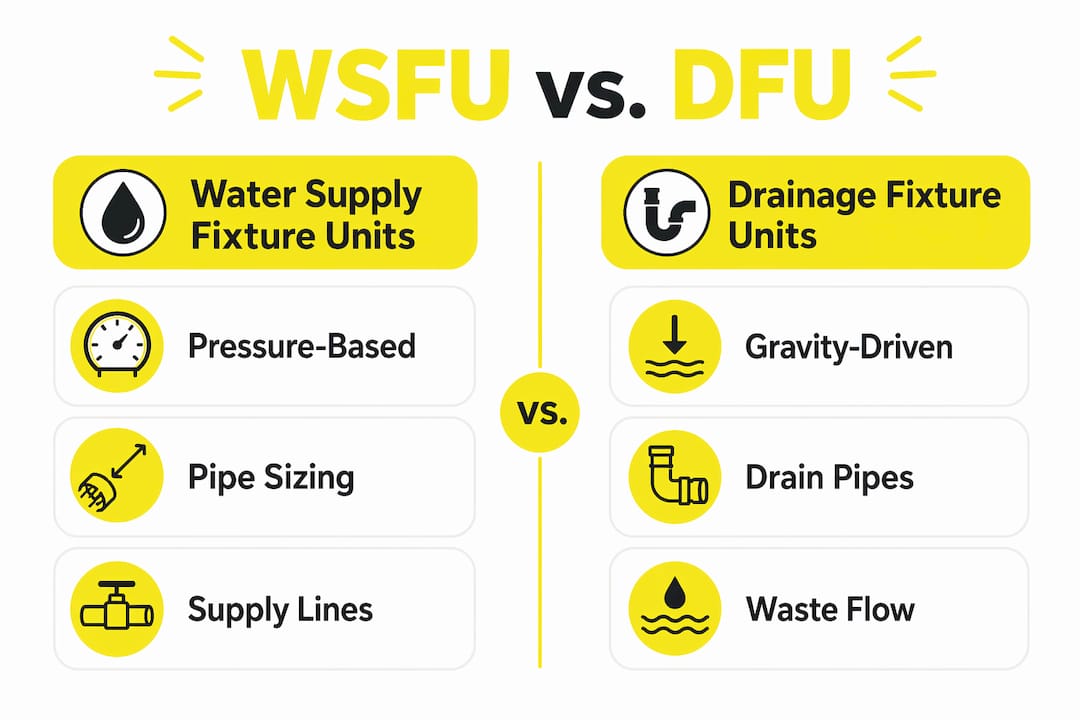
A 4-inch drain stack can handle up to 500 DFU on the stack itself, and up to 160 DFU on a branch. That distinction matters when you are adding fixtures to an existing building and need to confirm the existing stack can carry the added load.
Pro Tip: Always run your WSFU and DFU calculations in separate columns. Mixing the two in a single tally is one of the fastest ways to produce a pipe sizing error that fails inspection.
Hot and cold water supply lines also require separate WSFU totals. Hot and cold lines are sized separately because codes assign different loads to each branch based on fixture requirements. A kitchen sink, for instance, draws from both hot and cold supply, but the split is not always 50/50.
Why do fixture units matter for pipe sizing?
Fixture units prevent a costly design mistake: sizing pipes for a scenario that never actually happens. The fixture unit method prevents oversizing by recognizing that not all fixtures run at the same time. Oversized pipes waste money on materials and can actually reduce water velocity enough to cause sediment buildup in drain lines.
The probability model behind fixture units is called Hunter’s Curve. Hunter’s Curve models the probability that simultaneous fixture use decreases as the total number of fixtures grows. The curve flattens at higher fixture counts, which is why a 20-unit apartment building does not need pipes twenty times larger than a single-family home.
Here is why this matters in practice for a property developer:
- Accurate demand estimation keeps pipe diameters at the minimum size that still delivers adequate flow, reducing material costs.
- Code compliance requires showing that pipe sizes meet minimum pressure requirements at the farthest fixture from the main supply.
- Permit approval depends on documented fixture unit calculations that inspectors can verify against IPC or UPC tables.
- System longevity improves when pipes are sized correctly because water velocity stays within the range that prevents erosion and noise.
- Renovation planning becomes cleaner when you know the existing system’s fixture unit capacity before adding new bathrooms or kitchens.
Plumbers and engineers must show that pipe diameters maintain 15–20 PSI at the farthest fixture from the main supply. That pressure threshold is the standard benchmark in permit documentation.
Fixture units are not just a calculation tool. They are the official language inspectors use to verify that your plumbing system will perform safely under real-world conditions. Getting them right the first time is the difference between a smooth permit approval and a costly redesign.
Proper pipe sizing in commercial buildings is especially critical because the fixture counts are higher and the consequences of undersizing show up immediately in tenant complaints and code violations.
What are common mistakes when using fixture units?
The most frequent error is treating WSFU and DFU as the same number. Mixing WSFU and DFU leads to improper pipe sizing and almost always triggers a code rejection during inspection. The two systems exist for different parts of the plumbing network and must stay separate throughout the design process.
Other common mistakes include:
- Using the wrong code edition. The IPC and UPC are updated on regular cycles, and municipalities often adopt amendments. A value that was correct under an older edition may not match the current local requirement.
- Ignoring occupancy type. A mixed-use building with retail on the ground floor and apartments above requires separate fixture unit calculations for each occupancy type. Blending them into one total produces an inaccurate load estimate.
- Skipping separate hot and cold calculations. Hot and cold branch sizing uses separate WSFU totals. Treating the combined fixture WSFU as the load for each branch line leads to undersized hot water supply pipes.
- Assuming residential tables apply to commercial fixtures. Commercial toilets, urinals, and service sinks often carry higher fixture unit values than their residential counterparts.
- Not verifying local amendments. Some Massachusetts municipalities have adopted local amendments to the state plumbing code that change specific fixture unit values or pipe sizing tables.
Pro Tip: Before starting any plumbing renovation, pull the current local code edition from your building department and confirm which fixture unit table applies. A five-minute check can prevent a failed inspection.
Reviewing a plumbing renovation plan for commercial spaces with a licensed plumber before submitting permits catches these errors before they cost money.
How do fixture units affect your plumbing permit?
Municipalities use fixture unit totals as a direct input into permit fee calculations. Some jurisdictions charge a flat fee for projects up to 19 fixture units and then add a per-unit fee beyond that threshold. One example structure charges $5 per unit above the flat-fee ceiling, which means a large addition can add meaningful cost to your permit budget.
Understanding this connection helps property developers budget accurately from the start. Key points about fixture units and the permit process:
- Permit applications typically require a fixture unit schedule listing every fixture, its code-assigned value, and the running total for both supply and drainage systems.
- Fixture unit totals on permit applications help municipalities standardize administrative review and confirm that proposed pipe sizes match the calculated load.
- Inspectors cross-reference the submitted fixture unit schedule against installed pipe diameters during rough-in inspection.
- An error in the fixture unit count can trigger a plan review correction, delaying your project start date.
- Developers adding fixtures to an existing system must document the existing fixture unit load and the proposed addition separately to show the combined total stays within the capacity of existing mains.
The plumbing inspection process for property owners connects directly to these calculations. Inspectors are not just checking that pipes are installed neatly. They are verifying that the math behind the pipe sizes holds up.
Key Takeaways
Plumbing fixture units are the standard design language that connects fixture count to pipe size, permit approval, and long-term system performance.
| Point | Details |
|---|---|
| Core definition | A fixture unit is a dimensionless load factor based on discharge rate, frequency, and duration of use. |
| WSFU vs. DFU | Water supply and drainage fixture units are separate systems with different values for the same fixture. |
| Hunter’s Curve logic | Probability theory shows not all fixtures run at once, preventing costly pipe oversizing. |
| Permit impact | Municipalities use fixture unit totals to calculate permit fees and verify code compliance during inspection. |
| Common error | Mixing WSFU and DFU values or using the wrong code edition leads to failed inspections and redesigns. |
Why I think most homeowners learn this concept too late
Most homeowners and developers encounter fixture units for the first time when a permit gets rejected or an inspector flags a pipe sizing error. By that point, the walls may already be framed and the schedule is slipping. The calculation is not complicated, but the timing of when you do it matters enormously.
What I have seen repeatedly is that people treat fixture units as a contractor’s problem rather than an owner’s concern. That mindset is expensive. When you understand that a half-bath addition carries roughly 3.5 WSFU and that your existing 3/4-inch supply line may already be near its capacity, you can ask the right questions before the project starts. You can also catch a contractor who is guessing at pipe sizes rather than calculating them.
The IPC and UPC tables are publicly available. Spending an hour with the fixture unit table for your code edition before your first design meeting puts you in a much stronger position. You will know whether the proposed pipe sizes make sense, and you will recognize immediately if a contractor is using residential values for a commercial fixture or skipping the hot-and-cold split calculation entirely.
My honest recommendation: treat fixture unit calculations the way you treat a structural load calculation. You would not skip the math on a beam. Do not skip it on your plumbing supply lines either. The cost of getting it right upfront is a fraction of the cost of tearing out installed work to correct an undersized pipe.
— Matt
Plumbing compliance starts with the right calculations
Fixture unit calculations are the foundation of every plumbing permit Mysticvalleyservices submits in Massachusetts. Getting those numbers right before a single pipe is cut is what keeps projects on schedule and on budget.

Mysticvalleyservices provides plumbing inspections, system assessments, and permit-ready documentation for homeowners and property developers across Massachusetts. If you are planning an addition, a renovation, or a full system review, the plumbing inspection guide for property owners walks you through exactly what inspectors check and how fixture unit documentation fits into that process. You can also review the full range of Mysticvalleyservices plumbing services to find the right starting point for your project.
FAQ
What is a plumbing fixture unit in simple terms?
A plumbing fixture unit is a number assigned to each plumbing fixture that represents its probable water demand or drainage load. Engineers add up these numbers to determine the correct pipe size for a building.
Are WSFU and DFU the same thing?
No. Water Supply Fixture Units (WSFU) apply to supply pipes and are based on pressure-driven flow. Drainage Fixture Units (DFU) apply to drain pipes and are based on gravity discharge rates. The values for the same fixture differ between the two systems.
How do fixture units affect my permit fees?
Many municipalities calculate plumbing permit fees using fixture unit totals. Some charge a flat fee up to a set threshold, then add a per-unit fee for every unit above that number, so larger projects pay more.
Which code should I use for fixture unit values?
Use the code edition currently adopted by your local municipality, either the IPC or UPC, including any local amendments. Code editions are updated periodically, and local amendments can change specific fixture unit values.
Do I need separate calculations for hot and cold water lines?
Yes. Hot and cold water supply lines are sized using separate WSFU totals because plumbing codes assign different loads to each branch based on the fixture’s hot and cold water requirements.