Managing plumbing maintenance contracts is the process of organizing, negotiating, and overseeing service agreements that keep your plumbing systems running reliably while controlling costs. For Massachusetts homeowners and commercial property managers, a well-structured plumbing service agreement is the difference between a predictable maintenance budget and a surprise $8,000 pipe failure in february. Mid-size commercial buildings typically pay $150–$500 per month for preventive plumbing maintenance. That range reflects real differences in scope, visit frequency, and service level. Getting those details right from the start is what separates a contract that protects you from one that costs you.
How to manage plumbing maintenance contracts effectively
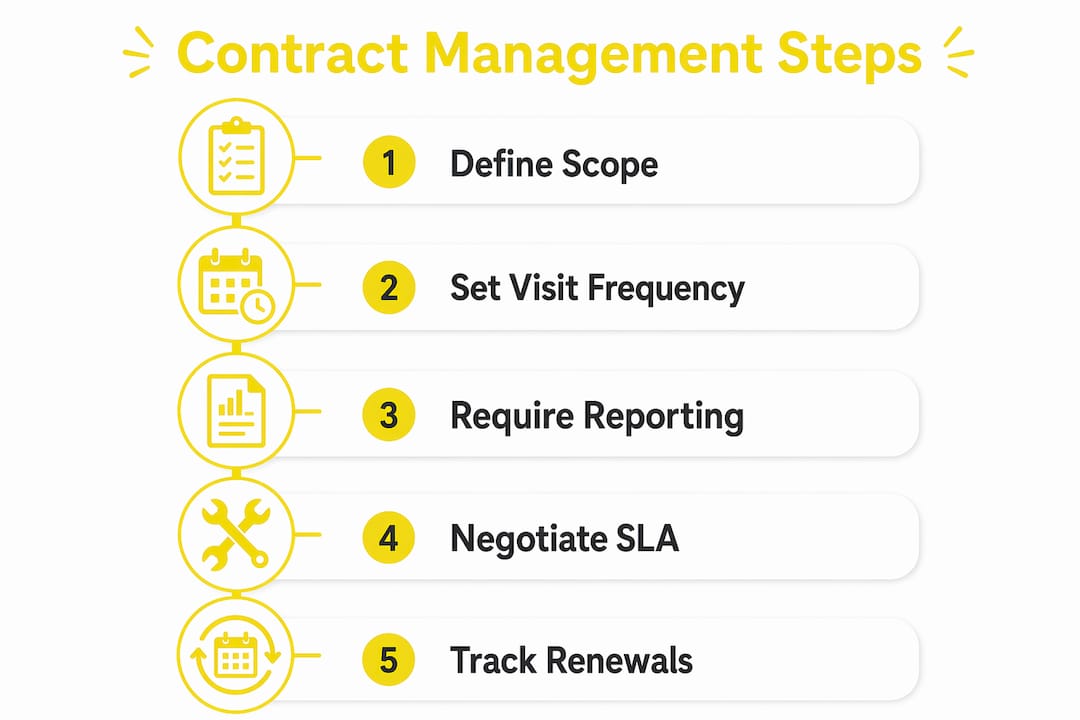
A plumbing maintenance contract, known in the industry as a preventive maintenance agreement or PMA, defines exactly what a plumbing provider will inspect, service, and report on at scheduled intervals. The core components are scope of work, visit frequency, reporting requirements, response time guarantees, and pricing terms. Every one of those elements needs to be specific and written down.
Scope of work is where most contracts go wrong. Vague language like “periodic” or “as needed” without specifying visit frequency turns a maintenance program into a disguised service call arrangement. A true PMA names the tasks: inspecting shut-off valves, checking water heater anode rods, testing pressure relief valves, clearing slow drains, and reviewing pipe insulation before winter. Massachusetts winters make that last item non-negotiable. Mysticvalleyservices includes a written plumbing maintenance checklist with every service visit so you always know what was done.

Visit frequency should match your property type. Residential homeowners generally need two visits per year, timed around the seasons. Commercial properties with high fixture counts, such as restaurants or multi-unit buildings, typically require quarterly or monthly visits. The contract must state the exact number of visits per year, not a range.
Written reporting after each visit is not optional. A signed service report documents what was inspected, what was found, and what was corrected. That paper trail protects you if a dispute arises and helps you track recurring issues before they become expensive repairs.
Pro Tip: Ask for a sample service report before signing any contract. If a provider cannot show you one, their reporting process probably does not exist.
Response time guarantees belong in every contract. A service level agreement, or SLA, specifies how fast the provider responds to urgent calls. For commercial properties, a four-hour response window for active leaks is a reasonable standard. Residential contracts often allow 24 hours for non-emergency issues. Get the numbers in writing.
What negotiation strategies cut costs without cutting corners?
Negotiating a plumbing service agreement is not about grinding the price down. It is about identifying the clauses that carry the most financial and operational risk, then making sure those clauses work in your favor.
Property managers who focus negotiations on response time guarantees, auto-renewal protections, and termination rights reduce annual maintenance spending by 18–25%. That is a meaningful number for anyone managing multiple properties in Massachusetts.
Here is how to approach the negotiation:
- Rank clauses by financial impact. Response times, auto-renewal terms, and termination rights carry the highest risk. Accept standard terms on low-impact provisions so you can push hard on the ones that matter.
- Add penalty clauses. A 10% discount on an invoice for a missed SLA is a proven accountability tool. Providers who object to this clause are telling you something important about their reliability.
- Include an escalation clause. Escalation clauses tied to the Consumer Price Index or fixed annual increases of 2–5% protect both parties over multi-year agreements. Without one, your provider absorbs rising labor costs and eventually cuts corners or walks away.
- Negotiate termination rights. A 30-day written notice clause gives you an exit if service quality drops. Contracts that require 90-day notice or impose cancellation fees deserve scrutiny.
- Use a standardized RFP. Comparing bids on price alone leads to hidden fees and incomplete assessments. A request for proposal that requires every vendor to quote the same scope makes comparison honest.
- Ask about volume discounts. If you manage multiple properties in the greater Boston area or along the Mystic Valley corridor, bundling them under one provider often unlocks meaningful rate reductions.
Pro Tip: Request a line-item breakdown of every bid. A provider who cannot separate labor, materials, and overhead in their quote is not ready to manage your contract.
What tools help property managers track plumbing contracts?
The right tools depend on how many contracts you manage. A single-family homeowner can track one contract with a shared Google Calendar and a folder of PDFs. A property manager overseeing 20 commercial units cannot.
Dedicated field service software automates scheduling, renewal alerts, invoicing, and service visit tracking. It reduces the administrative errors that cause missed visits and accidental contract lapses. Those lapses are more common than most property managers realize, and they create gaps in your maintenance record that complicate insurance claims.
The features worth prioritizing in any contract management tool are:
- Automated renewal alerts sent 60–90 days before a contract expires, giving you time to renegotiate rather than auto-renew by default
- Service visit logs linked to each property, so you can pull a full maintenance history in seconds
- Invoicing integration that matches payments to specific visits and flags discrepancies
- Document storage for signed contracts, amendments, and service reports in one searchable location
- Scheduling tools that sync with your provider’s calendar and send reminders to both parties
For homeowners managing a single property, a simple tracking sheet works well. The table below shows a practical format for logging plumbing maintenance visits.
| Visit date | Tasks completed | Issues found | Follow-up needed | Next visit due |
|---|---|---|---|---|
| March 15, 2026 | Valve inspection, water heater check | Minor sediment buildup | Flush water heater | September 2026 |
| September 10, 2026 | Pipe insulation check, drain clearing | None | None | March 2027 |
Centralized documentation also protects you during commercial plumbing renovations. When a contractor needs to know what was last serviced and when, a complete maintenance record saves hours of guesswork.
What mistakes do property managers make with plumbing contracts?
Most contract problems are predictable. Recognizing them before you sign is far cheaper than fixing them afterward.
- Vague scope language. A contract that lists “general plumbing maintenance” without a task checklist gives your provider unlimited discretion over what they actually do. Require a named checklist attached as an exhibit to the contract.
- Ignoring auto-renewal terms. Auto-renewal clauses typically lock you into another 12-month term unless you cancel 30 days prior. Missing that window is a common and expensive mistake.
- Confusing agreement types. A master service agreement governs the overall relationship between you and a vendor. A maintenance agreement defines the specific recurring work. Mixing them up creates scope creep and unbilled work. Keep them separate and make sure both are signed.
- Verbal amendments. Any change to a contract must be documented and signed. Verbal agreements about added tasks or adjusted pricing are unenforceable and lead to disputes.
- Skipping the annual review. Contracts should be reviewed every year, not just at renewal. Your property’s needs change, and your contract should reflect that.
“A plumbing maintenance contract that lacks a specific task checklist, defined visit frequency, and written reporting requirements is not a maintenance program. It is a service call with a monthly fee attached.”
Mysticvalleyservices recommends scheduling an annual contract review every october, before the Massachusetts heating season begins. That timing lets you address pipe insulation, water heater performance, and freeze protection before the first hard frost. You can also review winter plumbing prep to understand what a thorough seasonal inspection should cover.
Key Takeaways
Effective plumbing contract management requires specific scopes, written reporting, and negotiated SLAs to deliver reliable service and real cost control.
| Point | Details |
|---|---|
| Define scope precisely | Require a named task checklist as a contract exhibit, not vague language like “general maintenance.” |
| Negotiate high-impact clauses | Focus on response times, termination rights, and escalation clauses to protect your budget. |
| Track auto-renewal dates | Set alerts 60–90 days before expiration to avoid unwanted 12-month extensions. |
| Separate agreement types | Keep master service agreements and maintenance agreements as distinct, signed documents. |
| Use the right tools | Match your tracking method to your portfolio size, from a simple log to dedicated field service software. |
What I’ve learned from watching Massachusetts property owners get this wrong
After years of working with homeowners and commercial property managers across Massachusetts, the pattern is consistent. The contracts that cause the most pain are not the ones with bad providers. They are the ones with ambiguous language that good providers interpret differently than their clients expected.
The most common dispute I see involves scope creep. A property manager assumes that “routine maintenance” includes clearing a slow floor drain. The provider bills it as a separate service call. Both parties are technically correct, and the contract is the problem. A task checklist attached as a signed exhibit eliminates that dispute entirely.
The second issue is renewal inertia. Property managers get busy, the auto-renewal date passes, and they are locked in for another year with a provider whose performance has slipped. Setting a calendar reminder 90 days before every renewal date costs nothing and saves real money.
Massachusetts also has a specific seasonal rhythm that should shape every plumbing contract. The freeze risk from november through march means pipe insulation checks and outdoor shutoff valve inspections belong in every fall visit. If your current contract does not include those tasks, you are carrying risk that a well-written agreement would transfer to your provider. Addressing common tenant plumbing complaints before they escalate is exactly what a well-managed contract makes possible.
Build a relationship with your plumbing provider, not just a transaction. Providers who know your property perform better. They catch the slow pressure drop in your second-floor bathroom because they remember it was fine last quarter. That institutional knowledge is worth more than saving $20 a month by switching vendors every year.
— Matt
Mysticvalleyservices plumbing plans for Massachusetts property owners
Mysticvalleyservices offers structured plumbing maintenance plans built for Massachusetts homeowners and commercial property managers who want reliable service without the guesswork.
Every plan from Mysticvalleyservices includes a written task checklist, signed service reports after each visit, and priority scheduling for urgent calls. Pricing is transparent, with no hidden fees for standard maintenance tasks. Whether you manage a single-family home in Medford or a commercial building in Somerville, the full range of services covers everything from seasonal inspections to water heater maintenance. Contact Mysticvalleyservices to review your current contract or set up a new maintenance plan that actually protects your property. You can also check areas we serve to confirm coverage for your location.
FAQ
What should a plumbing maintenance contract include?
A plumbing maintenance contract must include a specific task checklist, defined visit frequency, written reporting requirements, response time guarantees, and clear pricing terms. Vague language like “as needed” is a red flag that the agreement lacks real structure.
How much does a plumbing maintenance contract cost in Massachusetts?
Commercial plumbing maintenance contracts typically run $150–$500 per month for mid-size office buildings. Residential plans vary by scope and visit frequency, so request an itemized quote before signing.
How do I avoid auto-renewal traps in service agreements?
Set a calendar reminder 60–90 days before your contract’s expiration date. Most auto-renewal clauses require written cancellation 30 days prior, so early awareness gives you time to renegotiate or switch providers.
What is the difference between a master service agreement and a maintenance agreement?
A master service agreement defines the overall terms of your relationship with a vendor. A maintenance agreement specifies the recurring tasks and visit schedule. Keeping them as separate, signed documents prevents scope creep and billing disputes.
How often should plumbing maintenance visits happen?
Residential properties generally need two visits per year, timed around seasonal changes. Commercial properties with high fixture counts typically require quarterly or monthly visits, depending on usage and local code requirements.