A domestic hot water loop is a plumbing system that keeps heated water moving through your pipes so it arrives instantly at any faucet, shower, or appliance the moment you turn the handle. No more running the tap for extended periods while cold water clears the line. The system uses a circulation pump and a return line to push water continuously or on demand from your water heater out to your fixtures and back again, so the pipe is always primed with hot water.
The core components are straightforward:
- Water heater: The source that heats and reheats water as it circulates
- Circulation pump: Moves water through the loop, triggered by a timer, thermostat, motion sensor, or push button
- Supply line: Carries hot water from the heater toward fixtures
- Return line: Sends cooled water back to the heater to be reheated
- Controls: Temperature sensors or demand switches that tell the pump when to run
- Balancing valves: Regulate flow so every branch of the loop gets even hot water delivery
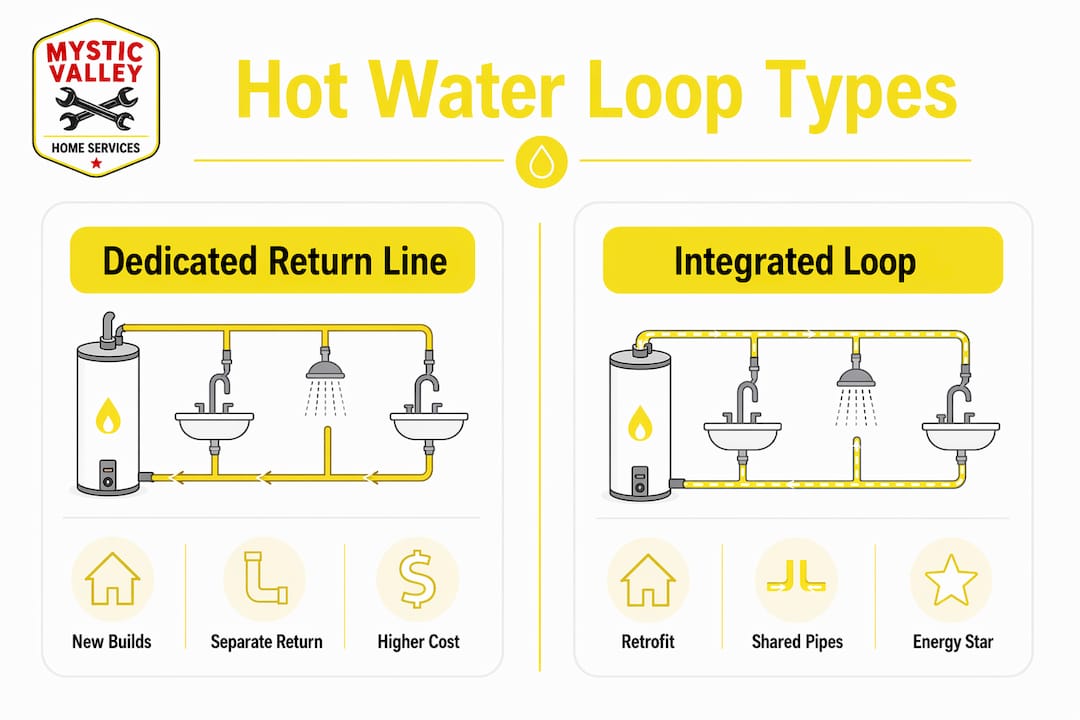
Two main system types exist. A dedicated return line loop uses a separate return pipe running back to the heater, typically installed during new construction. An integrated loop (also called a retrofit loop) routes cooled water back through the existing cold water line using a pump installed at the furthest fixture. Both accomplish the same goal; the difference is in the piping and where the pump lives.
How does a domestic hot water loop circulate water?
The water heater sits at the center of the system. Hot water leaves the heater through the supply line and travels toward your fixtures. Without a loop, that water cools as it sits in the pipe between uses. With a loop, a circulation pump keeps water moving so cooled water never stagnates at the fixture end.
Here is how the cycle works step by step:
- The pump activates based on its control signal (timer, thermostat, motion sensor, or button press)
- Hot water pushes through the supply line toward fixtures
- Cooled water at the far end of the loop gets pulled back toward the heater through the return line
- A temperature sensor monitors the loop; once water reaches the set temperature, the pump shuts off
- The heater reheats any returned water, and the cycle repeats
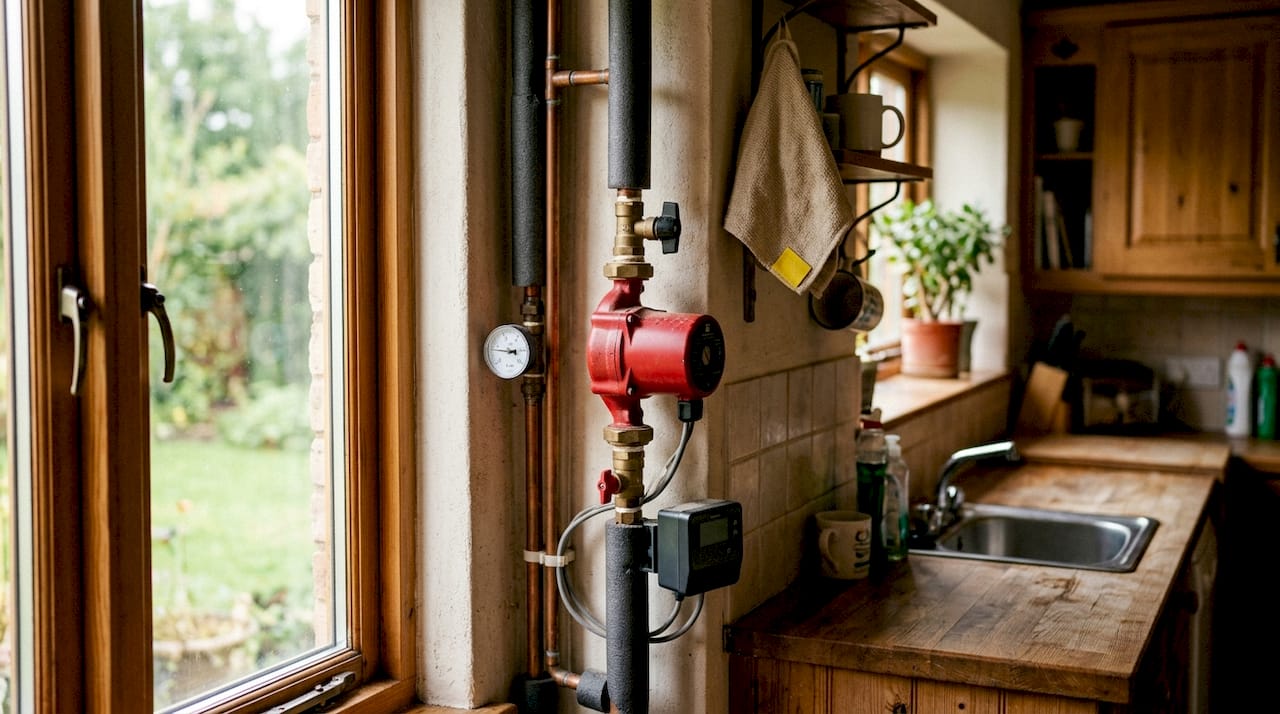
In a dedicated return line system, the pump typically mounts near the water heater on the return side, which is the cooler end of the loop. In an integrated retrofit system, the pump installs under the cabinet at the furthest fixture from the heater. That pump contains a sensor that activates when water temperature drops below a set threshold (commonly 85°F) and shuts off when it climbs back to around 95°F, per InterNACHI’s guidance on integrated loop operation.
For demand-controlled systems, the ENERGY STAR program describes the process clearly: when you activate the pump, it pulls cooled water from the hot water line and sends it back to the heater through the cold water pipe. When water reaches the desired temperature, the control shuts the pump off. Water that would have gone down the drain instead returns to the heater.
Pro Tip: In a demand-controlled system, a small temperature rise in the cold water line is normal and temporary. The cold line returns to its usual temperature quickly, so this is not a performance flaw.
What are the two main types of hot water loops?
The choice between a dedicated return line and an integrated loop shapes your installation cost, pipe layout, and long-term efficiency.
Dedicated return line loop
This is the preferred setup for new construction. A separate return pipe runs from the furthest fixture back to the water heater, creating a true closed loop. The pump mounts near the heater on the return side.
- Hot water circulates continuously or on a schedule through a dedicated pipe
- No interference with the cold water supply
- More pipe and labor upfront, but cleaner long-term performance
- Works well in multi-story homes and larger properties where multi-unit plumbing complexity demands reliable temperature balance
Integrated (retrofit) loop
This type uses the existing cold water pipe as the return line, making it the practical choice for retrofitting an existing home without opening walls for new piping.
- Pump installs under the sink at the furthest fixture from the heater
- Temperature sensor controls activation automatically
- Cold water line may feel slightly warm temporarily after a pump cycle
- Lower upfront cost, but the cold water interference is a tradeoff worth knowing about
Control options for both types include:
- Timers: Run the pump during peak-use hours only
- Thermostats: Activate based on pipe temperature drop
- Motion sensors: Detect occupancy and prime the loop before you reach the fixture
- Push buttons: On-demand activation, the most energy-efficient control method
The 2021 IECC requires that controls for circulating hot water system pumps automatically shut off the pump when water in the loop reaches the desired temperature and when there is no demand for hot water.
How do you get the most efficiency from a hot water loop?
Running a circulation pump continuously wastes energy. The pump heats water that nobody is using, and heat bleeds out of uninsulated pipes around the clock. Demand-initiated controls such as motion sensors, push buttons, and adaptive timers solve this by running the pump only when hot water is actually needed.
Key efficiency practices:
- Insulate all recirculation piping. Heat loss through bare pipes defeats the purpose of the loop. California residential compliance standards mandate pipe insulation on all recirculation lines, and it is best practice everywhere regardless of local code.
- Install balancing valves on each branch. Without them, water follows the path of least resistance and leaves distant fixtures cold. Balancing valves sized correctly for each branch and riser keep temperatures consistent throughout the home.
- Eliminate dead legs. Unused or capped pipe sections where water stagnates increase heat loss and create a real health hazard by promoting Legionella bacteria growth. Keeping pipe runs compact and avoiding dead legs is a design priority, not an afterthought.
- Size the pump for head pressure, not just flow rate. The pump needs enough pressure to overcome friction losses in the piping loop. Undersizing on head pressure means the pump runs but water barely moves; oversizing wastes electricity. Proper pump sizing balances system requirements against energy draw.
- Use adaptive scheduling. DOE’s Zero Energy Ready Home program allows recirculation systems that learn your household’s hot water demand pattern and adapt their schedule accordingly, per Building America Solution Center guidance.
Pro Tip: Thermostatic balancing valves give you finer control than standard balancing valves. They adjust flow based on actual water temperature rather than a fixed setting, which helps maintain consistent delivery even as demand fluctuates throughout the day.
For homeowners interested in how radiant heating complements a well-designed hot water system, in-floor radiant heating shares similar principles around heat distribution and pipe insulation.
What does hot water loop installation actually involve?
Installation complexity depends heavily on whether you are building new or retrofitting an existing home.
New construction with a dedicated return line:
- Plan the pipe layout so the loop passes near every fixture before returning to the heater
- The International Plumbing Code limits the maximum distance from the water heater to any fixture to 50 feet
- Ideally, keep the circulation loop within 10 feet of every fixture for fastest delivery, per NYCHA design guidelines
- Mount the pump near the heater on the return side
- Insulate all supply and return piping before closing walls
- Install balancing valves at each branch
Retrofit with an integrated loop:
- Identify the fixture furthest from the water heater
- Install the pump and sensor unit under that fixture’s cabinet
- Connect the pump to both the hot and cold supply lines at that location
- No new return piping required; the cold water line serves as the return path
- Insulate accessible pipe runs where possible
Both approaches require plumbing code compliance review before work begins. Minimum pipe diameter on supply and return portions of the loop is ¾ inch nominal, per Building America Solution Center specifications.
Common maintenance needs:
- Check pump operation annually; listen for unusual noise or vibration
- Inspect and clean strainers or filters on the pump inlet
- Verify temperature sensor calibration on integrated loop pumps
- Inspect pipe insulation for gaps, compression, or moisture damage
- Review your home plumbing maintenance checklist to keep the full system in shape
For multi-story homes or properties with complex layouts, a licensed plumber should balance the system after installation. Getting the flow rates right across multiple branches is not a set-and-forget task, and an unbalanced loop will leave some fixtures cold no matter how good the pump is.
Key Takeaways
A domestic hot water loop eliminates wait time at fixtures by keeping heated water moving through a dedicated or integrated pipe loop controlled by sensors, timers, or demand switches.
| Point | Details |
|---|---|
| Two system types | Dedicated return line suits new builds; integrated loops retrofit into existing cold water pipes. |
| Demand controls save energy | Motion sensors, push buttons, and adaptive timers prevent the pump from running when no hot water is needed. |
| Insulate all recirculation piping | Bare pipes bleed heat continuously; insulation is mandated by California standards and best practice everywhere. |
| Pump sizing matters | Select a pump based on head pressure to overcome pipe friction, not flow rate alone. |
| Dead legs are a health risk | Stagnant water in unused pipe sections promotes Legionella growth; keep pipe runs compact and eliminate dead legs in the design. |
Mysticvalleyservices installs, retrofits, and maintains domestic hot water recirculation systems across Massachusetts. Whether you are planning a new build or want to add a loop to an existing home, the team can assess your layout, recommend the right pump and controls, and handle professional plumbing services from design through commissioning. Reach out to get a system that delivers hot water where you need it, when you need it, without wasting energy in between.