Annual plumbing inspections are required because most plumbing failures develop slowly and invisibly, long before a homeowner notices water damage, mold, or a spiking utility bill. A professional inspection catches those hidden problems early, when a repair costs a fraction of what emergency restoration runs. Industry guidelines treat once per year as the baseline for most residential and commercial properties, with more frequent checks—every 6–12 months—for homes over 20–30 years old, with hard water, or with galvanized pipes.
Household leaks can waste nearly 10,000 gallons of water annually without producing a single visible sign. That figure alone explains why plumbing maintenance matters: the damage accumulates quietly behind walls, under floors, and inside water heaters until the cost of ignoring it dwarfs the cost of a routine check.
Why annual plumbing inspection is required for every property
A yearly inspection is not a formality. It is the only reliable way to assess components that degrade gradually and never announce themselves until they fail.
- Hidden leaks and slow seepage rot subflooring, weaken drywall, and invite mold growth without a single drip appearing at the surface.
- Corrosion on supply lines and fittings restricts water flow and eventually causes pipe failure, often with no warning.
- Water heater deterioration (sediment buildup, depleted anode rods, moisture at the base) shortens appliance life and raises energy costs.
- Worn shutoff valves that seize in an emergency leave you unable to stop water flow when it matters most.
- Drain and sewer line blockages start as slow drains and escalate into full backups if left unaddressed.
A full annual inspection takes a few hours and covers components that a short seasonal walkthrough simply does not reach: anode rod condition, sewer line warning signs, sump pump function, and slow-developing corrosion at supply line fittings, similar to the importance of yearly home inspections highlighted in Why Your Roof Needs an Annual Inspection in Georgia. Think of the seasonal checklist as a quick monthly maintenance round and the annual inspection as the once-a-year deep service.
1. Silent leaks cause structural damage before you see them
Leaks behind walls or under floors are the most destructive plumbing problem precisely because they are invisible. Water saturates insulation, weakens floor joists, and creates ideal conditions for mold, all while the surface looks fine. By the time discoloration or odor appears, the structural damage is already done.
A licensed plumber uses moisture meters and visual checks to find seepage that no homeowner walkthrough would catch. Catching a pinhole leak early means a localized repair; missing it for another year can mean replacing cabinetry, subflooring, and drywall.
2. Corrosion in supply lines reduces flow and causes failures
Galvanized steel pipes corrode from the inside out, gradually narrowing the pipe diameter and reducing water pressure. The restriction is so gradual that most homeowners attribute low pressure to municipal supply rather than their own pipes. By the time flow is noticeably poor, the pipe wall may be thin enough to fail under normal pressure.
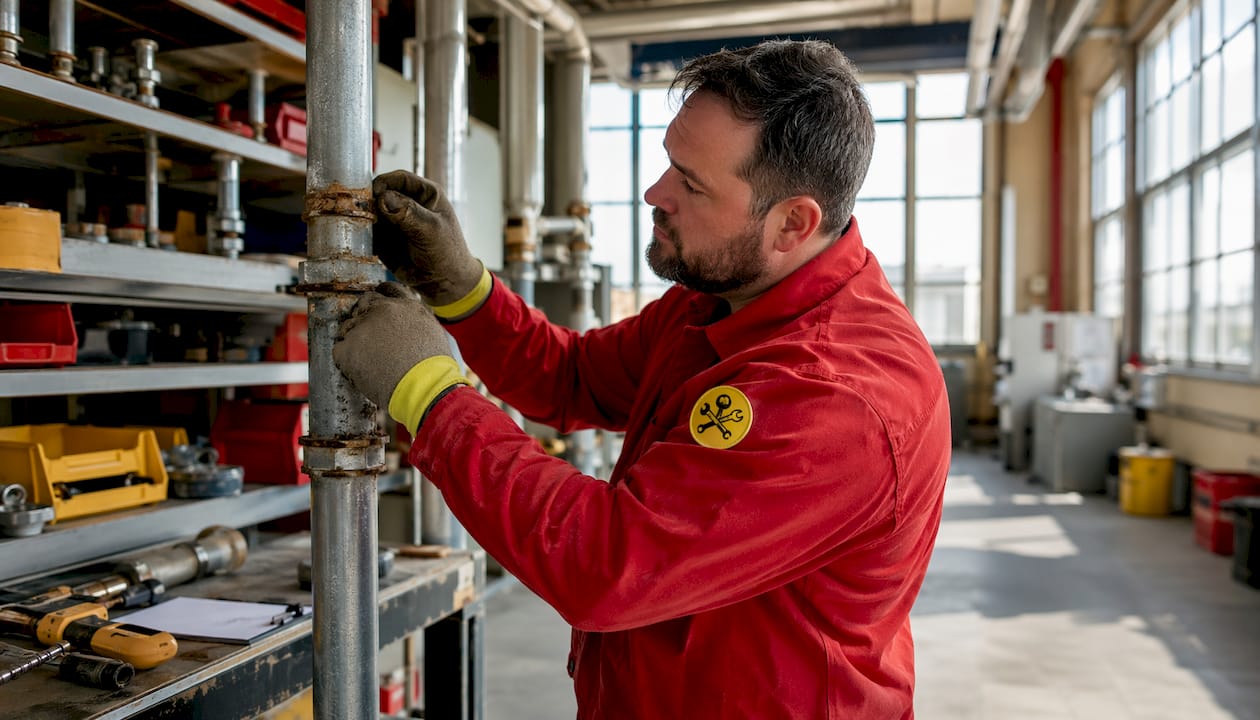
Supply line fittings at appliances like dishwashers, refrigerators, and washing machines are equally vulnerable. An inspection checks every connection point, not just the ones that are easy to see.
3. Worn shutoff valves fail when you need them most
A shutoff valve that has not been operated in years often seizes. Licensed professionals routinely find valves that look fine but will not close in an emergency, turning what should be a simple repair into a water-off-at-the-street situation. Testing every shutoff valve annually keeps them operable and gives you a reliable emergency response.
4. Water heater issues develop silently and expensively
Sediment accumulates at the bottom of a water heater tank every year, forcing the burner to work harder and shortening the appliance’s life. The anode rod, which prevents tank corrosion, depletes over time and needs periodic replacement. Neither issue produces obvious symptoms until the heater fails or starts leaking.
Routine maintenance that includes flushing sediment and inspecting the anode rod keeps the water heater running efficiently and reduces monthly energy costs. Catching a failing pressure relief valve during an inspection prevents a far more dangerous outcome.
5. Drain and sewer line blockages escalate fast
A slow drain in one fixture is easy to dismiss. Slow drains across multiple fixtures signal a developing blockage in the main sewer line, which can back up into the home if left alone. Tree root intrusion, grease buildup, and pipe deterioration all progress gradually and show up clearly during a professional inspection.
Pro Tip: If you notice slow drains in more than one room at the same time, schedule an inspection immediately rather than waiting for your annual date. That pattern almost always points to a main line issue.
6. Early detection prevents emergency repair costs
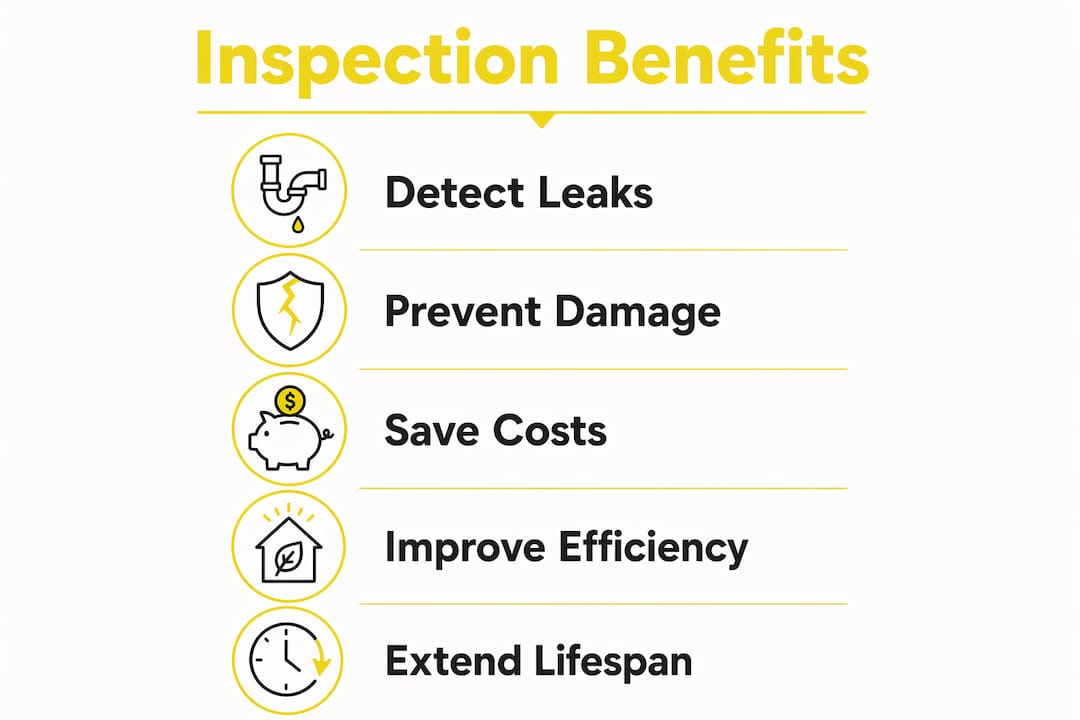
The financial case for annual inspections is straightforward. Preventive maintenance is almost always less expensive than emergency repairs, and far less disruptive. A plumber who finds a corroding sewer section during a scheduled visit can recommend targeted relining; the same problem discovered during a backup requires emergency excavation, mold remediation, and potentially structural repair.
Annual inspections also reduce the likelihood of water damage claims, which affect homeowner’s insurance premiums over time.
7. Water efficiency improves with regular checks
Hidden leaks and worn fixtures waste water constantly. A professional inspection identifies inefficiencies that inflate monthly water and energy bills without the homeowner realizing the source. Fixing a running toilet or a slow-seeping supply line connection can produce measurable savings on the next bill cycle.
Water heater efficiency follows the same logic. A well-maintained unit uses less energy to heat the same volume of water, and routine maintenance tasks like sediment flushing directly reduce heating costs.
8. Inspections extend the lifespan of pipes and appliances
Plumbing systems that receive regular attention simply last longer. Checking and adjusting water pressure prevents stress on pipes, valves, and fixtures. Tightening fittings and replacing worn seals before they fail avoids the cascading damage that one failed component can cause to adjacent parts.
A consistent inspection record also helps you track which components are aging and plan replacements on your schedule rather than in response to a failure. Comparing this year’s notes to last year’s is where the most useful findings tend to emerge.
Pro Tip: Keep a written log of every inspection finding, even minor ones. Year-over-year comparison reveals which components are degrading fastest and lets you budget for replacements before they become urgent.
9. How often should plumbing be inspected?
Annual inspections fit most properties, but risk factors push that frequency higher for certain homes.
- Standard: Once per year for most residential and commercial properties.
- Older homes (20–30+ years): Every 6–12 months, especially with galvanized steel or aging cast-iron pipes.
- Hard water areas: Every 6–12 months, since mineral buildup accelerates wear on fixtures and water heaters.
- Multi-unit buildings: At least annually, plus as-needed checks when neighbors report slow drains or odors.
- After major plumbing events: Schedule an inspection immediately after a slab leak, sewer backup, or water heater failure, then return to the annual routine.
- Warning signs requiring immediate inspection: Unexplained bill spikes, musty odors, slow drains across multiple fixtures, warm spots on floors, or recurring clogs.
Homes with galvanized pipes or shared plumbing in condos need inspections every 6–12 months because corrosion and shared-line issues can escalate quickly and affect neighboring units.
10. Local codes and safety hazards inspections catch
Massachusetts building codes require plumbing systems to meet specific standards for pipe materials, water pressure, and fixture installation. Annual inspections verify compliance and flag any modifications that may have introduced code violations, which matter most when selling a property or filing an insurance claim.
Safety hazards identified during inspections include cross-connections that risk contaminating the potable water supply, improperly vented drain lines that allow sewer gas into living spaces, and relief valves on water heaters that are no longer functional. These are not cosmetic issues. Sewer gas contains hydrogen sulfide, and a failed relief valve on a water heater is a genuine safety risk.
Pair your annual plumbing check with seasonal winter prep to cover the full range of Massachusetts-specific risks, from frozen pipes to spring thaw damage.
Mysticvalleyservices expertise and homeowner resources
Mysticvalleyservices brings professional plumbing and heating expertise to Massachusetts homeowners and property managers who want predictable maintenance rather than reactive emergencies. The team provides thorough annual inspections that cover every component from water heater anode rods to main shutoff valves, with written findings you can track year over year.
Homeowners can start with the plumbing maintenance checklist to understand what a professional inspection covers and what to monitor between visits. For property managers handling multiple units, preventive plumbing contracts lock in scheduled inspections and priority service, removing the guesswork from maintenance planning. Mysticvalleyservices also stays current with Massachusetts plumbing code requirements, so every inspection doubles as a compliance check.

Ready to schedule your annual inspection or set up a maintenance contract? Explore Mysticvalleyservices services and get your plumbing system professionally evaluated before a small problem becomes an expensive one.
Key Takeaways
Annual plumbing inspections are required because hidden leaks, corrosion, and aging components cause serious damage long before they become visible, and catching them early costs far less than emergency repairs.
| Point | Details |
|---|---|
| Annual inspections are the baseline | Most properties need a professional inspection once per year; homes more than 20–30 years old, or with hard water or galvanized pipes, should have inspections every 6–12 months. |
| Leaks waste water invisibly | Household leaks can waste nearly 10,000 gallons annually without producing visible signs. |
| Full inspections take 2–3 hours | A proper annual check covers anode rods, sewer lines, and shutoff valves that seasonal walkthroughs miss. |
| Early detection saves money | Preventive maintenance costs far less than emergency repairs, mold remediation, or structural restoration. |
| Written logs improve outcomes | Tracking findings year over year reveals which components are degrading and lets you plan replacements proactively. |