Emergency plumbing response is the coordinated process that addresses urgent plumbing failures to stop property damage and restore safe water systems. It begins the moment you call and follows a defined sequence: phone triage, dispatch, onsite stabilization, diagnosis, and a written repair plan. Knowing how emergency plumbing response works gives you the ability to act fast, communicate clearly, and avoid costly mistakes. Mysticvalleyservices handles this process for homeowners and business owners across Massachusetts, following industry best practices at every stage.
How does an emergency plumbing call get triaged and handled?
The first call you make is the most important action you take during a plumbing crisis. Dispatchers trained in urgent plumbing response answer around the clock and immediately assess the severity of your situation. They ask targeted questions about water flow, the location of the leak, whether the water is clean or contaminated, and whether you have already shut off the supply. Detailed caller information helps dispatchers send the right technician with the proper equipment, which speeds up both diagnosis and repair.
Triage separates true emergencies from issues that can wait. Burst pipes, active flooding, sewage backups, and gas-adjacent water leaks get immediate dispatch. Slow drains, minor drips, and contained leaks often qualify for next-day priority service. Not all urgent issues require after-hours emergency dispatch, and a good dispatcher will tell you honestly which category your situation falls into. Avoiding an unnecessary emergency call saves you real money.
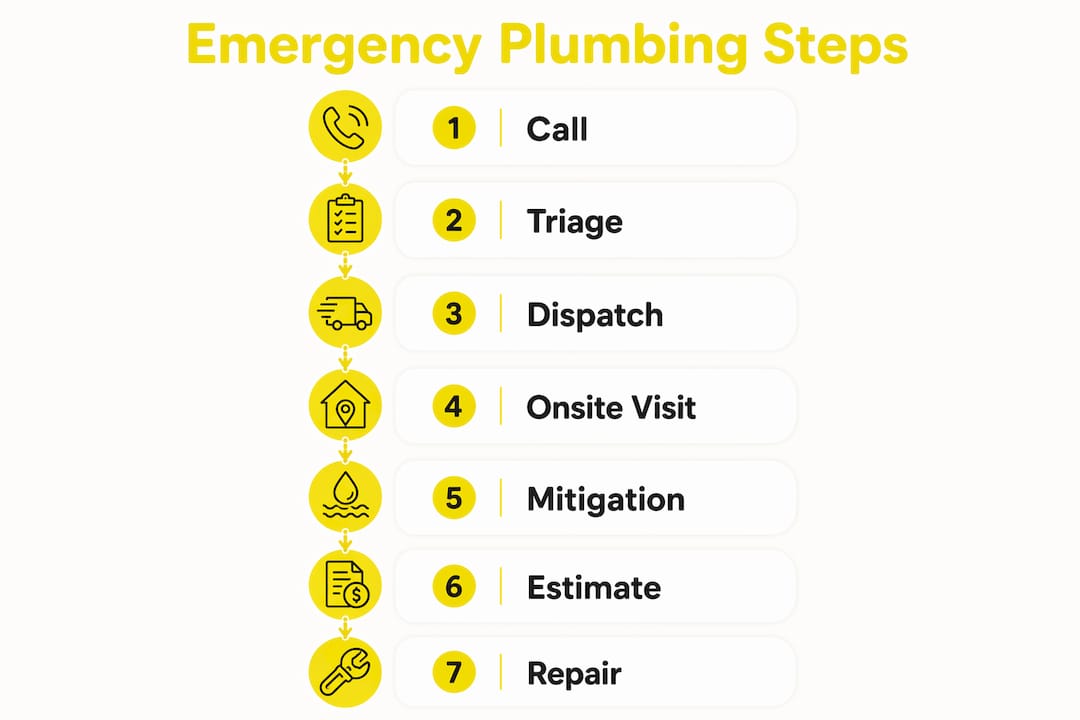
One of the most underappreciated parts of the triage process is caller guidance. A trained dispatcher walks you through shutting off your main water valve before the technician even leaves the shop. Guiding callers through shutoff significantly reduces property damage while the crew is in transit. That single step can mean the difference between a wet floor and a flooded basement.
Here is what a dispatcher needs from you to handle your call efficiently:
- Water type and source: Is it clean supply water, gray water, or sewage?
- Leak location: Which room, which fixture, and which floor?
- Shutoff status: Have you turned off the main valve or the fixture shutoff?
- Active damage: Is water still flowing, and has it reached electrical panels or appliances?
- Access: Are there locked gates, dogs, or other access issues the technician should know about?
Pro Tip: Write your main water shutoff location on a sticky note and put it inside your electrical panel door. You will find it fast when you need it most.
What to expect when the emergency plumber arrives onsite
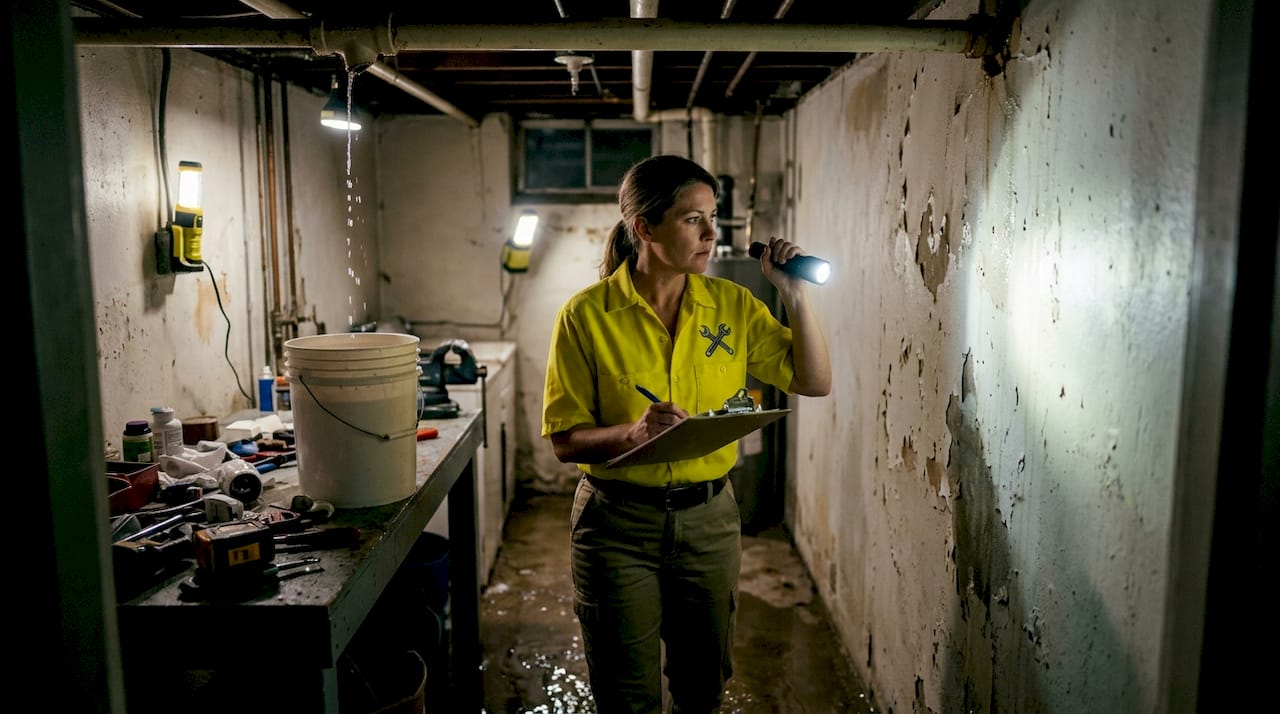
A professional technician does not walk in and start cutting pipes. The first five minutes are a structured walkthrough to understand the full scope of the problem. The goal is to diagnose the root cause, not just patch the visible symptom. A burst pipe behind a wall, for example, may be the result of a frozen section, a failed fitting, or a corroded joint. Each cause requires a different fix.
The technician’s onsite process follows a clear sequence:
- Safety check: Confirm no electrical hazards, gas exposure, or structural risks before touching anything.
- Active water control: Verify the supply is off or shut it off immediately if it is still running.
- Damage assessment: Walk the affected area to identify all water intrusion points, including hidden areas behind walls or under floors.
- Diagnostic tools: Use moisture meters, pipe cameras, or thermal imaging to locate hidden leaks or damage.
- Written estimate: Present a fixed-price quote before any invasive work begins.
- Repair or stabilization: Complete the repair if parts and conditions allow, or stabilize the system for a scheduled permanent fix.
- Documentation: Photograph the damage, the repair, and the affected systems for your records and any insurance claim.
Technician visits include a full site walkthrough, root cause diagnosis, and a written fixed-price estimate before any repair work starts. That written estimate protects you from surprise charges and gives you a clear record for insurance purposes.
Emergency technicians are often limited to immediate mitigation during off-hours because specialized parts may not be available until business hours. A temporary repair stops the damage tonight. The permanent fix gets scheduled for the next day or the next available window. This is standard practice, not a shortcut.
Pro Tip: Take your own photos and video of the damage before the technician begins work. Your insurance adjuster will want documentation that predates the repair.
Understanding the plumbing inspection process used during emergency visits helps you ask better questions and evaluate the technician’s findings with confidence.
What do emergency plumbing services typically cost?
Emergency plumbing costs follow a predictable structure once you understand the components. After-hours emergency repairs include a flat dispatch fee plus labor rates that run 1.5x to 2x the standard daytime rate, with total costs typically ranging from $500 to $2,000 depending on severity and complexity. That range is wide because a burst pipe in a finished basement costs far more to address than a failed shutoff valve under a sink.
The two-stage repair model directly controls your costs. Emergency plumbing uses a two-stage process: stabilization during the emergency visit, then permanent repair scheduled during normal business hours. That approach keeps expensive after-hours labor focused on stopping damage rather than completing full repairs. You pay the premium rate only for what is truly urgent.
Key cost factors to understand before you call:
- Dispatch fee: A flat charge just for sending a technician, regardless of repair scope.
- After-hours labor rate: Typically 1.5x to 2x the standard hourly rate for evenings, weekends, and holidays.
- Parts and materials: Priced at retail or above during emergency calls due to limited supplier access.
- Scope of damage: Water that has reached flooring, drywall, or electrical systems adds remediation costs beyond plumbing.
- Insurance documentation: A written estimate and photo record support claims and can offset your out-of-pocket costs.
Always ask for a written quote before work begins. A reputable plumber provides one without hesitation.
How can homeowners and business owners prepare during a plumbing emergency?
Your actions in the first ten minutes of a plumbing emergency directly affect the final repair bill. The most effective thing you can do is shut off the water supply immediately. Every minute of active flow adds water volume, and water volume drives remediation costs.
Follow these steps while waiting for the technician:
- Shut off the main water supply or the fixture-specific shutoff valve if you can reach it safely.
- Turn off power to any electrical panels, outlets, or appliances in the affected area if water is nearby.
- Move valuables off the floor and away from the water path.
- Document everything with photos and video before touching or moving anything.
- Call your insurance company to open a claim file, even if you are unsure whether the damage meets your deductible.
- Communicate clearly with dispatch: Give them water type, leak location, shutoff status, and access details.
Business owners face additional obligations. Commercial emergency incidents require insurance-grade documentation for liability and compliance with municipal inspections. Keeping a maintenance log and incident record protects you during audits and speeds up claims processing.
A plumbing maintenance checklist reviewed annually reduces the likelihood of emergencies and gives you a ready record of your system’s condition. Business owners managing multiple properties benefit from maintenance contracts that include priority emergency dispatch and documented service history.
Pro Tip: Store a photo of your main shutoff valve, your water meter location, and your gas shutoff in a shared cloud folder. Anyone in your household or business can access it instantly during a crisis.
Key Takeaways
Emergency plumbing response works best when you act fast, communicate clearly, and understand that stabilization comes before permanent repair.
| Point | Details |
|---|---|
| Triage determines urgency | Dispatchers classify calls to send the right technician with the right tools immediately. |
| Caller shutoff action limits damage | Turning off the main valve before the technician arrives is the single most effective damage-reduction step. |
| Two-stage repairs control costs | Stabilization during the emergency visit keeps expensive after-hours labor focused on stopping damage. |
| Written estimates protect you | Always get a fixed-price quote before any invasive work begins to avoid surprise charges. |
| Documentation supports insurance | Photos, written estimates, and maintenance records speed up claims and protect against liability. |
What actually separates a good emergency response from a bad one
Speed matters, but it is not the whole story. I have seen technicians arrive in under 30 minutes and still cause more damage than they prevented because they skipped the diagnostic walkthrough and went straight to cutting. The quality of the initial phone triage and the technician’s discipline during the onsite assessment are what actually determine the outcome.
The best emergency responses I have witnessed share a common pattern: the dispatcher guides the caller through shutoff before the truck even rolls, the technician does a full walkthrough before touching a tool, and the homeowner gets a written estimate in hand before a single pipe is cut. That sequence is not bureaucratic. It is what separates a $600 repair from a $6,000 remediation project.
Homeowners consistently underestimate how much their own actions matter. The caller who has already shut off the water, moved valuables, and taken photos before the technician arrives saves time, reduces damage, and gets a faster, cleaner repair. The caller who is still watching water pour across the floor when the technician walks in is starting from a much worse position.
Choosing a local plumber who knows Massachusetts conditions, including freeze-thaw cycles, older pipe materials common in the region, and local code requirements, also improves outcomes. Local knowledge is not a soft advantage. It changes which parts the technician carries on the truck and how quickly they diagnose regional failure patterns.
— Matt
Mysticvalleyservices is ready when you need urgent plumbing help
Mysticvalleyservices provides 24-hour plumbing help to homeowners and business owners across Massachusetts, with technicians trained to follow the full triage, stabilization, and documentation process described here.

Every emergency call is answered by a trained dispatcher who guides you through immediate shutoff steps and sends the right technician with the right equipment. Mysticvalleyservices provides written estimates before any work begins and documents each job thoroughly to support insurance claims. Explore the full range of plumbing and heating services available, or review your plumbing code compliance obligations to stay protected year-round. When a plumbing crisis hits, Mysticvalleyservices is the call that gets it handled right.
FAQ
How fast can a plumber respond to an emergency?
Standard response times for 24/7 emergency plumbing services range from 30 to 90 minutes, depending on location, call volume, and traffic conditions.
What is the first thing I should do during a plumbing emergency?
Shut off the main water supply valve immediately. This single action limits water damage more than any other step you can take before the technician arrives.
Will the plumber fix everything in one emergency visit?
Not always. Emergency technicians focus on stabilization during off-hours visits, with permanent repairs scheduled for the next available business-hours window when parts and full resources are available.
How much does emergency plumbing service cost?
Emergency plumbing typically costs between $500 and $2,000, including a flat dispatch fee and labor rates 1.5x to 2x higher than standard daytime rates.
Do I need to call my insurance company right away?
Yes. Opening a claim file immediately, even before you know the full damage scope, protects your timeline and gives the adjuster a record that predates the repair.