A commercial plumbing inspection checklist is a systematic tool that helps property owners and managers verify every plumbing component meets operational and safety standards before problems escalate into costly failures. Unlike a maintenance log, inspections are point-in-time assessments focused on compliance verification and immediate occupant risk. For commercial properties in Massachusetts, where aging infrastructure and strict local codes intersect, a structured audit is not optional. Mysticvalleyservices works with property managers across the region to conduct these assessments before purchases, lease transitions, and insurance reviews.
What should a commercial plumbing inspection checklist cover?
A thorough commercial plumbing inspection checklist addresses every system that moves water into, through, and out of a building. Missing even one subsystem can leave a compliance gap or an undetected failure point.
Water supply piping and valves form the backbone of any inspection. Check all visible supply lines for corrosion, mineral deposits, and mechanical damage. Verify that isolation valves operate freely and that system pressure stays within the range specified by local code.
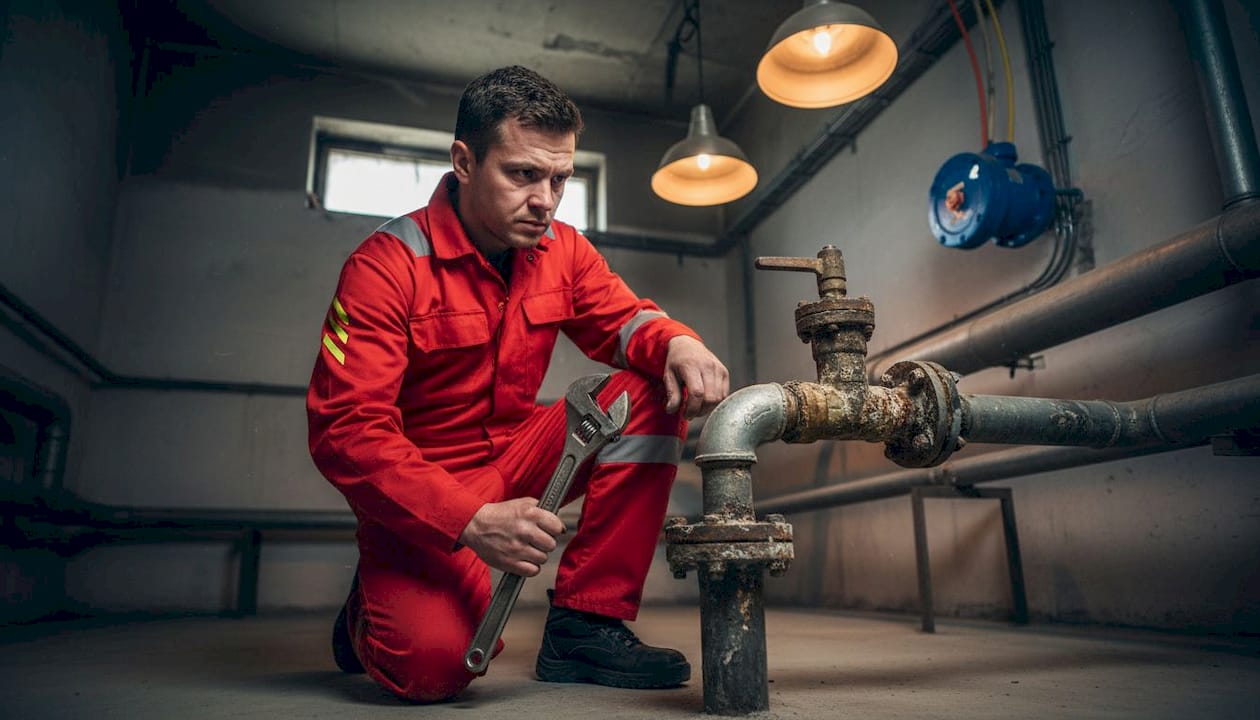
Drain, waste, and vent (DWV) systems require both visual and functional checks. Slow drainage, gurgling sounds, and sewer odors all signal blockages or venting failures. Vent stacks must terminate correctly above the roofline to prevent siphoning of trap seals.
Hot water systems carry a specific safety obligation. Annual Legionella risk assessments require water temperatures at or above 140°F at the heater and at or below 68°F at outlets to inhibit bacterial growth. That temperature window is narrow enough that it demands a calibrated thermometer, not a rough estimate.
Backflow prevention devices protect the public water supply from contamination. Every device needs a current test certificate from a certified tester. Lapsed certifications are a common code violation and a liability exposure for property owners.
Fixtures and fittings cover toilets, sinks, urinals, floor drains, and hose bibs. Check for running toilets, dripping faucets, cracked porcelain, and loose connections. Commercial restroom plumbing best practices call for flush valve inspection on every fixture, not just those showing visible problems.
Specialized systems such as grease traps, interceptors, and stormwater drainage need separate attention. Grease traps require documented cleaning intervals, and stormwater connections must remain free of cross-contamination with sanitary lines.
Water quality is the final parameter. Acceptable water quality targets include a pH of 6.5–8.5, hardness below 120 ppm, and residual chlorine between 0.5 and 4 ppm. Values outside these ranges accelerate pipe corrosion and scale buildup.
Pro Tip: Photograph every backflow preventer tag and certification sticker during the inspection. A photo record takes seconds and gives you instant proof of compliance during an insurance audit or lease dispute.
What tools and preparation do you need before an inspection?
Preparation separates a thorough inspection from a surface-level walkthrough. Gather building plans, previous inspection reports, and the asset service history before you set foot on site. Knowing what was repaired last year tells you where to look hardest this year.
The table below outlines the core tools for a commercial building pipe inspection and their primary use.
| Tool | Primary use |
|---|---|
| Pressure gauge | Verify supply pressure against code limits |
| Thermal imaging camera | Detect under-slab and behind-wall leaks |
| Moisture meter | Confirm active moisture in walls and ceilings |
| Water testing kit | Measure pH, hardness, and chlorine levels |
| Calibrated thermometer | Check hot water temperatures for Legionella compliance |
| Drain inspection camera | Assess sewer line condition and root intrusion |
Thermal imaging identifies moisture plumes that indicate active leaks under concrete slabs, a failure mode that visual inspection simply cannot catch. That single tool can prevent a six-figure slab repair from going undetected during a pre-purchase due diligence review.
Maintenance intervals vary by component: monthly checks for supply piping, quarterly reviews for backflow devices and pipe insulation, and annual assessments for anode rods and sewer lines. Knowing these intervals before you arrive lets you flag components that are overdue.
Every commercial plumbing inspection must be conducted by or under the supervision of a licensed plumber. Massachusetts law requires licensure for any work that involves testing, certifying, or reporting on plumbing system condition.
Pro Tip: Request the previous two inspection reports before scheduling your own. Recurring defects that appear across multiple reports signal a systemic problem, not a one-time fix.
How to systematically execute a commercial plumbing audit
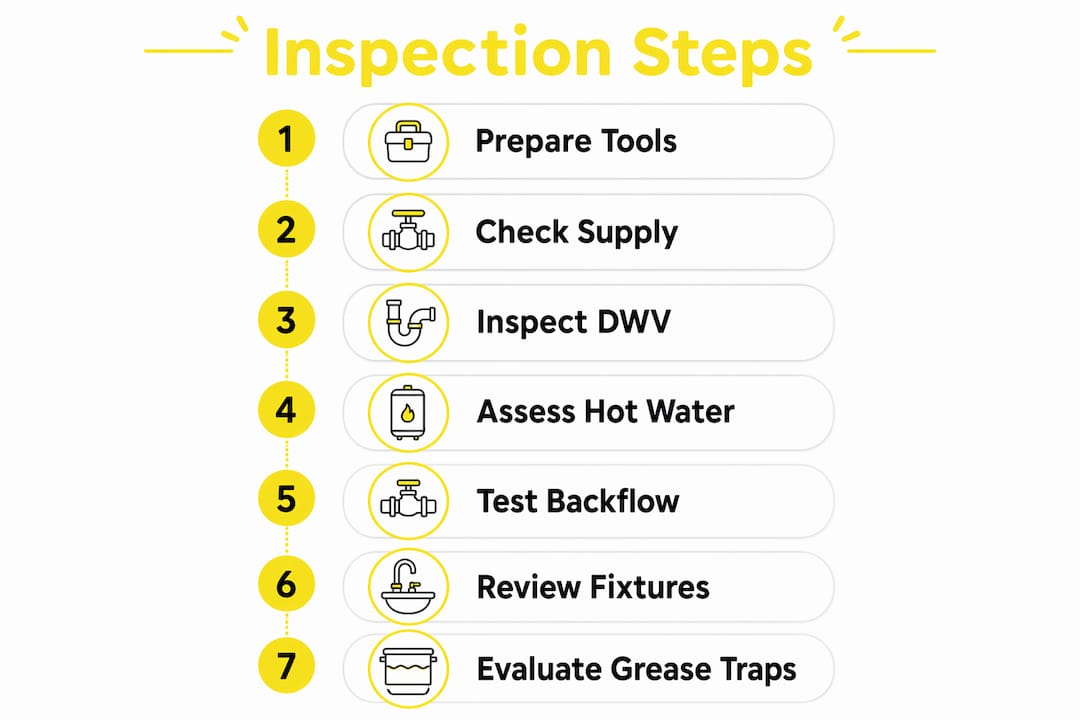
A consistent sequence prevents you from skipping sections under time pressure. Follow these steps on every inspection.
- Start at the water meter and main shutoff. Confirm the meter reads accurately and the main valve closes fully. A valve that sticks open is a flood risk during an emergency.
- Walk the supply lines from the meter to each fixture. Look for corrosion, staining, unsupported spans, and improper materials. Flag any galvanized steel in pre-1975 buildings for priority review.
- Test hot water system temperature at the heater and at the farthest outlet. Record both readings. Document the anode rod condition and note the last replacement date.
- Inspect and document every backflow prevention device. Check the test tag date. If any device is overdue for certification, flag it as a code compliance deficiency.
- Run every fixture. Flush each toilet, run each faucet, and activate each floor drain. Time the drain rate. A drain that takes more than 15 seconds to clear a standard fill signals a partial blockage.
- Assess the DWV system. Check vent stack terminations, look for signs of sewer gas odor, and inspect cleanout access points for condition and accessibility.
- Document defects with photos and severity ratings. Use a three-tier system: critical (immediate safety or code risk), moderate (functional impairment), and minor (cosmetic or low-priority maintenance).
- Deploy thermal imaging on concrete floors and exterior walls where moisture damage is suspected. Thermal imaging detects underground leaks that no visual check can find.
- Scope the main sewer line if the building is more than 20 years old or if the inspection history shows recurring drain issues. A camera run takes under an hour and can reveal root intrusion, offset joints, or collapsed sections.
After the walkthrough, compile your findings into a Property Condition Report. PCR delivery typically takes 1–3 days post-inspection, which fits neatly into most due diligence timelines for property acquisitions.
What common issues turn up during commercial plumbing inspections?
Certain defects appear repeatedly across commercial properties, regardless of building age or use type. Knowing what to expect helps you prioritize findings quickly.
- Corrosion and failed seals cause the majority of active leaks. Galvanized and cast-iron pipes in older buildings corrode from the inside out, so the exterior may look intact while the interior is nearly blocked.
- Mineral scale and sediment buildup reduce boiler efficiency and restrict flow in supply lines. Hard water above 120 ppm accelerates this process significantly.
- Backflow prevention failures rank among the most serious code violations. A device that fails its annual test must be repaired or replaced before the building can pass a compliance review.
- Slow drainage from root intrusion is common in properties with mature trees near sewer laterals. Roots follow moisture and can fill a 4-inch pipe within two growing seasons.
- Foundation movement affecting underground pipes is a particular concern in older buildings. Pre-1975 commercial properties carry a higher risk of brittle pipe failures caused by soil settlement and foundation shifts.
- Grease trap overflow and cross-contamination appear frequently in food service properties where cleaning schedules are inconsistent.
Prioritize repairs by compliance risk first, then by failure consequence. A lapsed backflow certification shuts down a property faster than a slow drain. Fix what the code requires before addressing what is merely inconvenient.
For a deeper look at how specific violations affect your obligations as a property owner, the plumbing code compliance guide from Mysticvalleyservices breaks down the most common Massachusetts code issues and their remediation paths.
What are best practices for staying compliant between inspections?
Compliance does not end when the inspector leaves. A building plumbing maintenance checklist run on a fixed schedule catches developing problems before they become code violations.
- Monthly: Visually inspect accessible supply lines and check for drips at fixture connections. Test that all shutoff valves operate freely.
- Quarterly: Inspect pipe insulation for damage, verify backflow device condition, and clear floor drain strainers.
- Annually: Replace anode rods in water heaters, scope the main sewer line in buildings over 20 years old, and conduct a full Legionella risk assessment.
MEP coordination is critical between inspections. Poor integration of mechanical, electrical, and plumbing systems leads to mold, structural decay, and operational failures that no single trade can resolve alone. Schedule combined MEP walkthroughs at least once per year.
Effective record-keeping is as important as the inspection itself. Maintain a work order log that ties every defect to a repair date and a responsible contractor. That paper trail protects you during insurance audits and lease disputes.
Pro Tip: Use a digital inspection platform to set recurring reminders for each maintenance interval. A missed quarterly backflow check is the kind of oversight that shows up at the worst possible time, during a sale or a tenant renewal.
For guidance on structuring ongoing service agreements, the plumbing maintenance contracts guide from Mysticvalleyservices covers what to include and what to watch out for.
Key Takeaways
A complete commercial plumbing inspection checklist covers supply lines, DWV systems, hot water equipment, backflow devices, fixtures, and water quality, and must be executed by a licensed plumber with documented findings.
| Point | Details |
|---|---|
| Cover all subsystems | Inspect supply, DWV, hot water, backflow, fixtures, and water quality on every audit. |
| Use thermal imaging | Deploy a thermal camera to find under-slab leaks that visual checks miss entirely. |
| Prioritize by compliance risk | Fix lapsed backflow certifications and code violations before addressing minor defects. |
| Follow interval-based maintenance | Run monthly, quarterly, and annual checks to catch problems between formal inspections. |
| Document everything | Photo records and work order logs protect you during audits, sales, and lease transitions. |
What I’ve learned from inspecting commercial properties in Massachusetts
The biggest mistake I see property managers make is treating a plumbing inspection as a box-checking exercise. They schedule it because a sale or lease renewal requires it, get the report, and file it away. The report then sits untouched until the next transaction, by which point a moderate defect has become a critical one.
The properties that hold their value and avoid emergency repair costs are the ones where the manager actually reads the report and acts on the moderate findings within 90 days. A corroded supply line flagged as “monitor” in one inspection becomes a burst pipe two winters later if no one follows up.
Older Massachusetts commercial buildings present a specific challenge. Many were built before 1975 with materials and configurations that no longer meet current code. Pre-1975 pipe failures accelerated by foundation movement are not rare edge cases. They are a predictable outcome in buildings of that age, and buyers who skip a thorough inspection before acquisition often discover this at the worst possible time.
My advice: build a relationship with one licensed plumbing professional who knows your building’s history. That continuity pays off. A plumber who has inspected your property three times in a row notices when something has changed. That institutional knowledge is worth more than the lowest bid on any given inspection.
— Matt
Mysticvalleyservices supports commercial property managers in Massachusetts
Commercial plumbing inspections require more than a checklist. They require licensed professionals who understand Massachusetts code, know what to look for in older buildings, and can deliver clear findings fast enough to support real decisions.
Mysticvalleyservices provides commercial plumbing inspection and maintenance services across Massachusetts, with detailed Property Condition Reports delivered within the standard 1–3 day window. Whether you are preparing for a property acquisition, managing a lease transition, or scheduling a preventive audit, the team brings the tools, the licenses, and the local code knowledge to do it right. Learn more about how plumbing inspections work or review the full range of commercial plumbing services available in your area.
FAQ
What is a commercial plumbing inspection checklist?
A commercial plumbing inspection checklist is a structured document used to verify that all plumbing components in a commercial building meet operational and code compliance standards. It covers supply lines, DWV systems, hot water equipment, backflow devices, fixtures, and water quality parameters.
How often should a commercial property have a plumbing inspection?
Most components require at minimum an annual formal inspection, with monthly and quarterly maintenance checks in between. High-use facilities or older buildings benefit from more frequent assessments.
What triggers a commercial plumbing inspection?
Commercial inspections are commonly triggered by pre-purchase due diligence, lease handovers, insurance audits, and code compliance reviews. They focus on snapshot condition and immediate risk rather than ongoing maintenance tracking.
Why do commercial plumbing inspections cost more than residential ones?
Commercial inspections run 20–40% higher in cost than residential assessments due to commercial-grade system complexity, stricter code requirements, and the operational disruptions that come with inspecting occupied buildings.
What is the Legionella risk in commercial water heaters?
Legionella bacteria thrive in water held between 77°F and 113°F. Annual Legionella assessments require heater temperatures at or above 140°F and outlet temperatures at or below 68°F to keep bacterial growth in check.