

Basement plumbing is defined as a below-grade drainage and supply system that combines gravity flow, vent pipes, and pump-assisted lifting to move wastewater out of your home. Understanding how basement plumbing works matters whether you are finishing a basement bathroom, diagnosing a slow drain, or planning a full renovation. The system differs fundamentally from upper-floor plumbing because wastewater cannot always flow downhill to the sewer. Ejector pumps, sealed sump pits, and vent stacks fill that gap. Mysticvalleyservices works with Massachusetts homeowners on exactly these systems every week, and the details below reflect what actually matters in the field.
How does a basement plumbing system work?
A basement plumbing system moves wastewater through three coordinated mechanisms: gravity drainage where elevation allows, pump-assisted lifting where it does not, and venting to keep the whole system breathing. Each mechanism depends on the others. Remove venting and your traps lose their water seal. Remove the pump and a below-grade toilet has nowhere to drain.
Gravity drainage relies on a consistent pipe slope. The industry standard is 1:40, meaning 25 mm of drop per meter of horizontal run. That ratio keeps solids and liquids moving together. Too steep and the liquid races ahead, leaving solids behind to clog the pipe. Too flat and nothing moves at all.
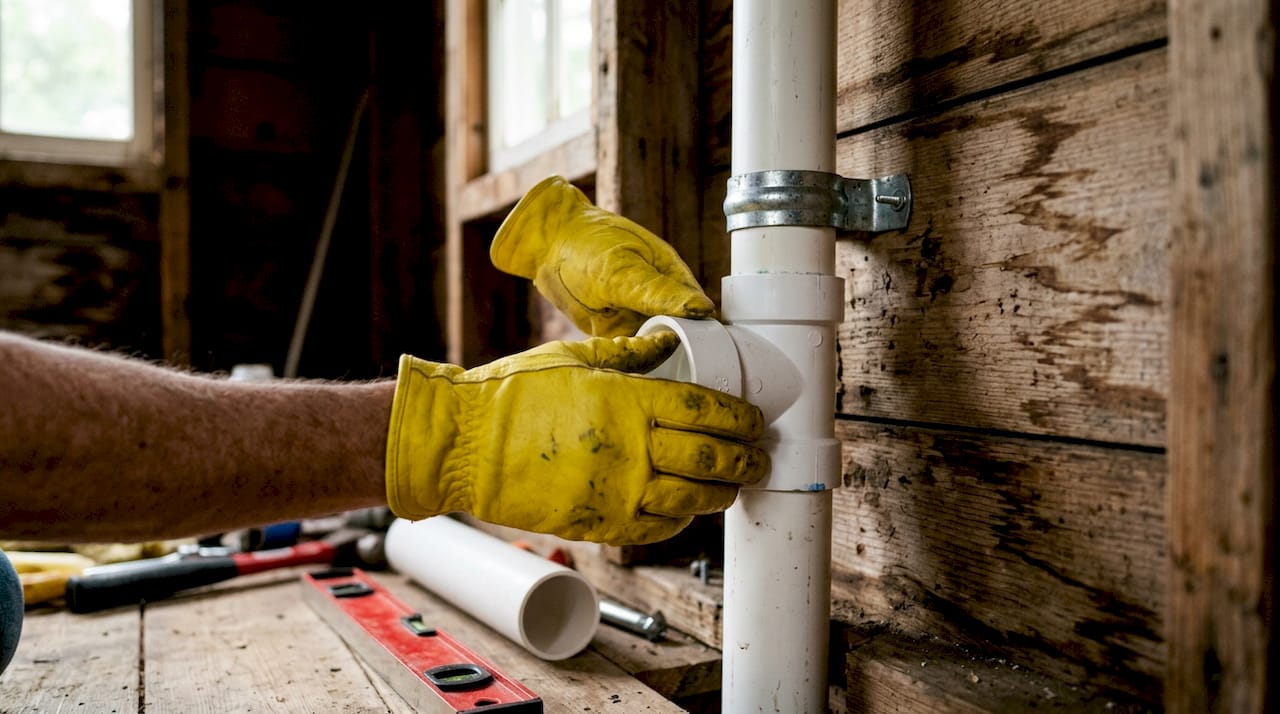
Venting is the part most homeowners overlook. Every drain in your basement needs a path for air to enter behind the flowing water. Without that air, the water column creates a vacuum that sucks the water out of your P-traps. Empty traps let sewer gas into your living space. Vent stacks or approved Air Admittance Valves satisfy this requirement under code.
Pump systems handle the elevation problem. When your basement floor sits below the main sewer line, wastewater physically cannot flow uphill on its own. A sewage ejector pump collects waste in a sealed pit and forces it up to the sewer connection. Correctly sized ejector pumps handle fixture loads reliably for years, which surprises many homeowners who assume pumps are fragile.
What are the main components of a basement plumbing system?
Every functional basement plumbing system shares the same core parts, even if the layout varies by house.
- Drain pipes: Sloped at the 1:40 standard to carry waste toward the ejector pit or main stack. PVC is the most common material in modern installations.
- P-traps: Curved sections under every fixture that hold a water seal, blocking sewer gas from entering the room.
- Vent pipes or Air Admittance Valves: Provide the air supply that lets drains flow freely and keeps trap seals intact.
- Sewage ejector pump: Sits inside a sealed pit below the slab. It activates when waste reaches a float-trigger level, then pumps the contents up to the main sewer line.
- Check valve: Installed on the pump discharge line to prevent pumped waste from flowing back into the pit when the pump shuts off.
- Shut-off valve: Positioned after the check valve so the pump can be isolated and serviced without draining the whole system.
- Sump pit lid: Must be airtight. A loose or cracked lid lets sewer gas escape directly into the basement.
The discharge line from an ejector pump follows a specific valve sequence. A union, check valve, and shut-off valve installed in that order gives you clean access for maintenance without flooding the floor. Skipping any one of those three components makes future service far harder than it needs to be.
Pro Tip: Size your ejector pump to handle the total fixture unit count for your basement, not just the toilet. Adding a sink or shower later without rechecking pump capacity is one of the most common causes of backup calls.
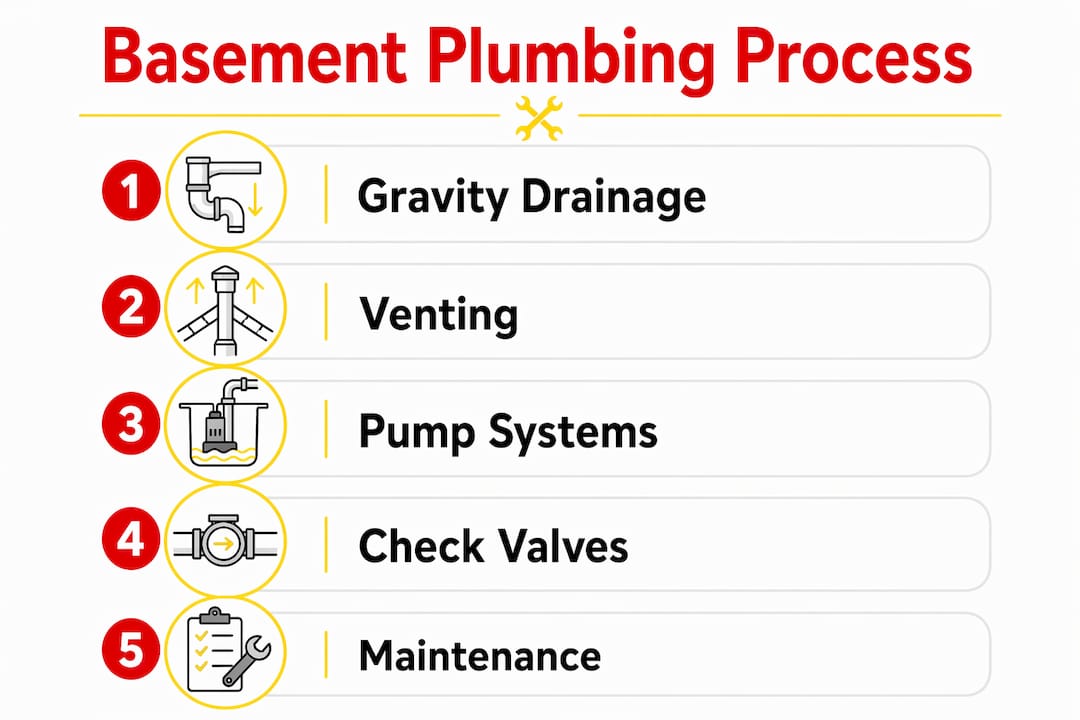
How does wastewater flow differently in a basement?
Wastewater movement in a basement follows different rules than on upper floors. The core difference is elevation. Upper-floor fixtures drain downward through the building and exit at grade or below. Basement fixtures often sit at or below the level of the main sewer line, which means gravity alone cannot complete the job.
- Fixture discharge: Water leaves the fixture and flows through a P-trap into a sloped drain pipe.
- Gravity run to the pit: The drain pipe carries waste at the 1:40 slope toward the ejector pit. This portion works exactly like upper-floor drainage.
- Collection in the sealed pit: Waste accumulates in the airtight sump basin. The float switch monitors the level.
- Pump activation: When waste reaches the trigger level, the ejector pump fires and forces the contents up through the discharge pipe.
- Check valve closes: Once the pump shuts off, the check valve blocks backflow so the discharge pipe does not drain back into the pit.
- Connection to main sewer: The discharge pipe ties into the home’s main drain-waste-vent stack above the basement floor level, where gravity takes over again.
Modern macerating and sewage ejector systems have made this process reliable enough that a fully functional basement bathroom, laundry room, or wet bar is now a standard renovation goal rather than an unusual project. The technology removes the gravity constraint that once made below-grade plumbing impractical for many homes.
What are the main basement drainage solutions?
Three installation approaches cover the vast majority of basement plumbing projects. Each has a specific use case.
Gravity drainage
Gravity drainage works when your basement floor sits high enough that drain pipes can slope down to the main sewer without a pump. This is the simplest and lowest-maintenance option. The 1:40 pipe slope standard still applies, and the pipes typically run through trenches cut into the concrete slab. Installation for a full basement bathroom using this method takes roughly 4–7 days from slab cutting to fixture connection.
Macerating (up-flush) systems
Macerating systems grind waste into a slurry and pump it through small-diameter pipes. The key advantage is that they do not require cutting the concrete slab. The unit sits on the floor behind the toilet and connects to existing drain and vent points. Up-flush systems still require mandatory venting per code to prevent odors and maintain flush performance. They work well for finished basements where slab cutting is not practical.
Sewage ejector pump systems
Ejector pump systems require slab cutting to install the pit but handle higher fixture loads than macerating units. They are the right choice for basement bathrooms with multiple fixtures or for homes where the main sewer line sits above the basement floor. Electrical requirements include a dedicated circuit, and most codes require a ground fault circuit interrupter outlet near the pump.
Pro Tip: Place your basement bathroom directly below an existing main-floor bathroom when possible. Proximity to existing plumbing stacks cuts trenching length and pipe runs significantly, which reduces both labor time and material cost.
The table below compares the three approaches across the factors that matter most for planning.
| Factor | Gravity drainage | Macerating system | Ejector pump system |
|---|---|---|---|
| Slab cutting required | Yes | No | Yes |
| Fixture capacity | High | Low to medium | High |
| Maintenance access | Standard | Easy | Requires pit access |
| Best use case | High basement floor | Finished space | Multiple fixtures, low floor |
| Venting required | Yes | Yes | Yes |
How do you maintain and troubleshoot basement plumbing?
Basement plumbing systems need regular attention at a few specific points. Neglecting them leads to the two most common failures: pump breakdown and sewer gas odor.
- Check the ejector pump float switch every 6 months. Debris can jam the float in the up or down position. A stuck float either runs the pump continuously or prevents it from activating at all.
- Inspect the sump pit lid for cracks or loose seals. A compromised lid is the most frequent source of sewer gas smell in finished basements.
- Test the check valve annually. Pour water into the pit manually and watch whether any flows back after the pump shuts off. Backflow means the check valve has failed.
- Verify pipe slope during any renovation work. Settling foundations can shift drain pipes out of the 1:40 standard over time, causing slow drains or recurring clogs.
- Keep the vent pipes clear. Debris or bird nests in roof vent stacks cause gurgling drains and trap siphoning in the basement before any other floor shows symptoms.
Installing isolation and union valves in the union-check-shutoff sequence makes pump removal a 20-minute job instead of a half-day project. Homeowners who skip this step during installation always regret it at the first service call.
Pro Tip: Label your ejector pump circuit breaker clearly and note the pump model on a sticker inside the pit lid. When the pump fails at 11 p.m., having that information on hand saves significant time and stress.
What code and safety rules apply to basement plumbing?
Code compliance in basement plumbing protects both your home and your family. The rules exist because below-grade systems carry real risks: sewer gas exposure, electrical hazards near water, and backflow contamination.
- Pipe sizing and slope: Drain pipes must meet minimum diameter requirements (typically 3 inches for a toilet, 1.5 inches for a sink) and maintain the 1:40 slope throughout.
- Venting: Every fixture requires a vent connection. Air Admittance Valves are permitted in many jurisdictions but must be installed in accessible locations per local code.
- Sealed sump pits: Ejector pump pits must have gas-tight lids to contain methane and hydrogen sulfide. Both gases are hazardous at elevated concentrations.
- Backwater valves: Many local codes require a backwater valve on the main drain line to prevent municipal sewer backflow into the basement during heavy rain events.
- Electrical safety: Ejector pump circuits require a dedicated breaker and a ground fault circuit interrupter outlet. Running a pump on a shared circuit is a code violation in most jurisdictions.
- Permits and inspections: Basement plumbing work almost always requires a permit. A licensed plumber who pulls the permit also takes responsibility for code compliance, which protects you at resale.
Key Takeaways
A basement plumbing system works reliably only when gravity drainage, venting, and pump-assisted lifting are all correctly installed and maintained together.
| Point | Details |
|---|---|
| Pipe slope is non-negotiable | The 1:40 standard prevents both clogs and liquid runoff; deviating in either direction causes failures. |
| Venting protects every fixture | All basement drains need a vent connection to prevent sewer gas entry and trap siphoning. |
| Ejector pumps are reliable | Correctly sized pumps handle fixture loads long-term; the sealed pit and check valve are what require regular inspection. |
| Valve sequence enables maintenance | Installing union, check valve, and shut-off in order makes pump service fast and clean. |
| Code compliance is not optional | Permits, sealed pits, backwater valves, and GFCI circuits are required in most jurisdictions and protect your home at resale. |
What I’ve learned from years of basement plumbing calls
The homeowners I talk to most often have two concerns: they worry that ejector pumps will fail constantly, and they assume basement plumbing is too complicated to touch without a full gut renovation. Both concerns are overblown.
Ejector pumps are standard, reliable components when sized correctly. The failures I see almost always trace back to an undersized pump, a jammed float, or a check valve that was never inspected. None of those are pump problems. They are maintenance problems.
The other thing I tell homeowners is to think about location before they think about fixtures. Placing a basement bathroom near an existing stack cuts the project cost more than any fixture upgrade ever will. The pipe runs are shorter, the trenching is minimal, and the venting path is already there.
Basement plumbing has genuinely changed in the last decade. Modern systems enable fully functional living spaces that were not practical before macerating technology matured. A basement bedroom with a full bath, a home office with a wet bar, a rental suite with its own laundry. These are real, achievable projects for most Massachusetts homes. The plumbing is not the obstacle it once was.
— Matt
Basement plumbing help from Mysticvalleyservices
Basement plumbing projects reward good planning and punish shortcuts. Getting the pipe slope right, sizing the pump correctly, and pulling the proper permits are details that determine whether your system runs quietly for decades or backs up at the worst possible moment.

Mysticvalleyservices handles basement plumbing installations across Massachusetts, from ejector pump systems and macerating unit setups to full basement bathroom rough-ins. The team also provides maintenance inspections for existing systems, covering float switches, check valves, vent lines, and slab drainage. If you are planning a renovation or dealing with a recurring backup, Mysticvalleyservices can assess your current setup and give you a clear path forward.
FAQ
What is the standard pipe slope for basement drains?
The industry standard is 1:40, which equals 25 mm of drop per meter of horizontal run. Deviating from this causes either clogs or liquid runoff that leaves solids behind.
Do basement bathrooms always need an ejector pump?
Not always. If the basement floor sits high enough that drain pipes can slope down to the main sewer line, gravity drainage works without a pump. Most below-grade bathrooms do require a pump.
How often should I inspect my ejector pump?
Check the float switch and pit lid seal every 6 months, and test the check valve annually. Catching a jammed float or a failed check valve early prevents backups and pump burnout.
Can I add a basement bathroom without cutting the concrete slab?
Yes. Macerating (up-flush) systems sit on the floor and pump waste through small pipes without requiring slab work. They still need proper venting per code and are best suited for lower fixture loads.
What causes sewer gas smell in a finished basement?
The most common causes are a cracked or loose ejector pit lid, a dry P-trap from an infrequently used fixture, or a blocked vent pipe. Fixing the pit seal or running water into unused drains resolves most cases quickly.