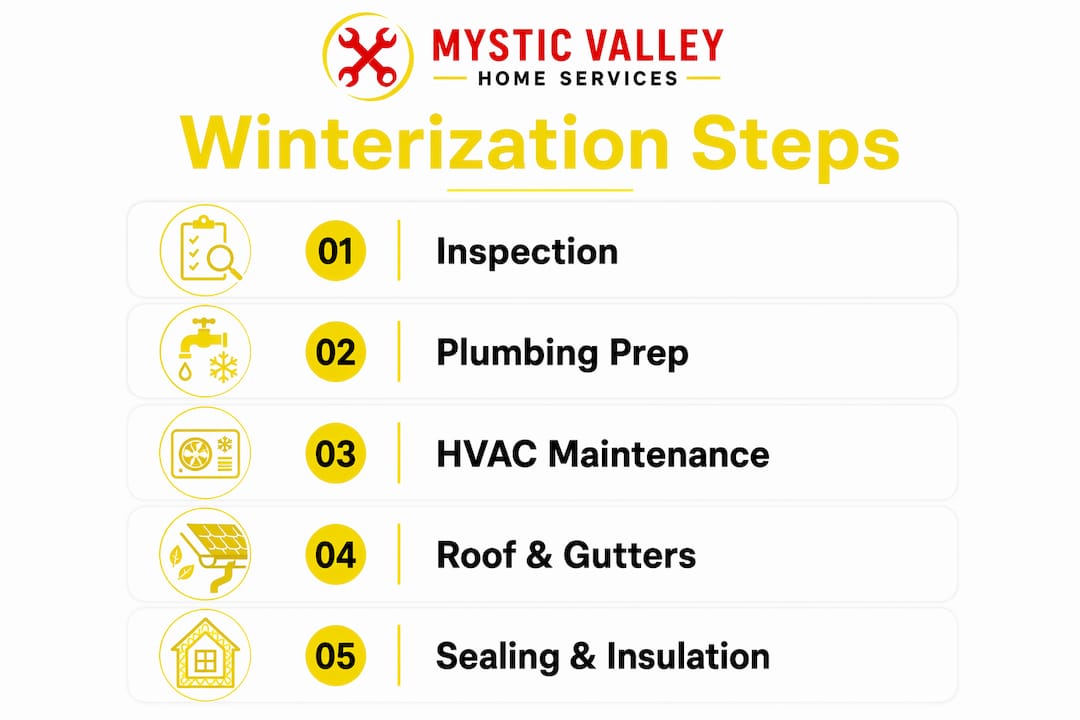
Commercial building winterization is a systematic, multi-phase process that protects critical systems from freeze damage, maintains operational continuity, and controls energy costs through cold months. It covers five core areas: sprinkler systems, HVAC equipment, plumbing, the building envelope, and snow and ice management. Done right, it starts in early fall and runs through spring, not just the week before the first freeze.
Here is what the process covers at a high level:
- Sprinkler systems: Drain wet-pipe lines in unheated spaces, verify dry-pipe and pre-action system readiness, test heat tracing and antifreeze loops
- HVAC: Test economizer dampers, check glycol concentrations, calibrate thermostats, and inspect boilers and rooftop units
- Plumbing: Insulate exposed pipes, drain exterior lines, set minimum thermostat setpoints to recommended levels, and add antifreeze to drain traps
- Building envelope: Seal gaps around windows, doors, and loading docks; inspect roof membranes and clear gutters
- Operations: Update emergency contacts, train staff, run tabletop drills, and confirm vendor contracts
Water damage from frozen pipes is a significant type of property damage in the United States, with costly claims reported. In data center or industrial environments, a single pipe rupture can push downtime costs far higher. The math on prevention is not complicated.
How winterization works for commercial sprinkler systems
Sprinkler systems are among the most vulnerable components in a commercial building during winter, and a burst sprinkler line can flood an entire floor in minutes. The approach depends on the system type.
Wet-pipe systems hold pressurized water at all times, making them highly susceptible to freezing in unheated spaces like parking garages, loading docks, and stairwells. Those areas either need consistent heat above 40°F or a conversion to a dry-pipe or pre-action system. Dry-pipe and pre-action systems use pressurized air or nitrogen instead of water, releasing water only when a head activates. Before winter, verify that the air pressure is holding, the compressor is functional, and the trip mechanism is clean.
Key sprinkler winterization tasks:
- Inspect and test all heat tracing devices on sprinkler cabinets and riser rooms; replace any failed elements
- Verify antifreeze loop concentrations with a refractometer and top up to manufacturer specifications
- Test flow switches, tamper switches, and fire alarm connections
- Check fire pump room heaters and confirm they maintain adequate warmth during cold snaps
- Repair any leaking seals or damaged pipe insulation before temperatures drop
- Document all inspection dates and findings for insurance and code compliance purposes
A commercial plumbing inspection checklist is a practical tool for tracking these tasks across multiple buildings or floors.
HVAC system winterization for commercial buildings
HVAC winterization goes well beyond swapping filters. The biggest freeze risk in commercial buildings is often not the heating system itself. It is the fresh air dampers.
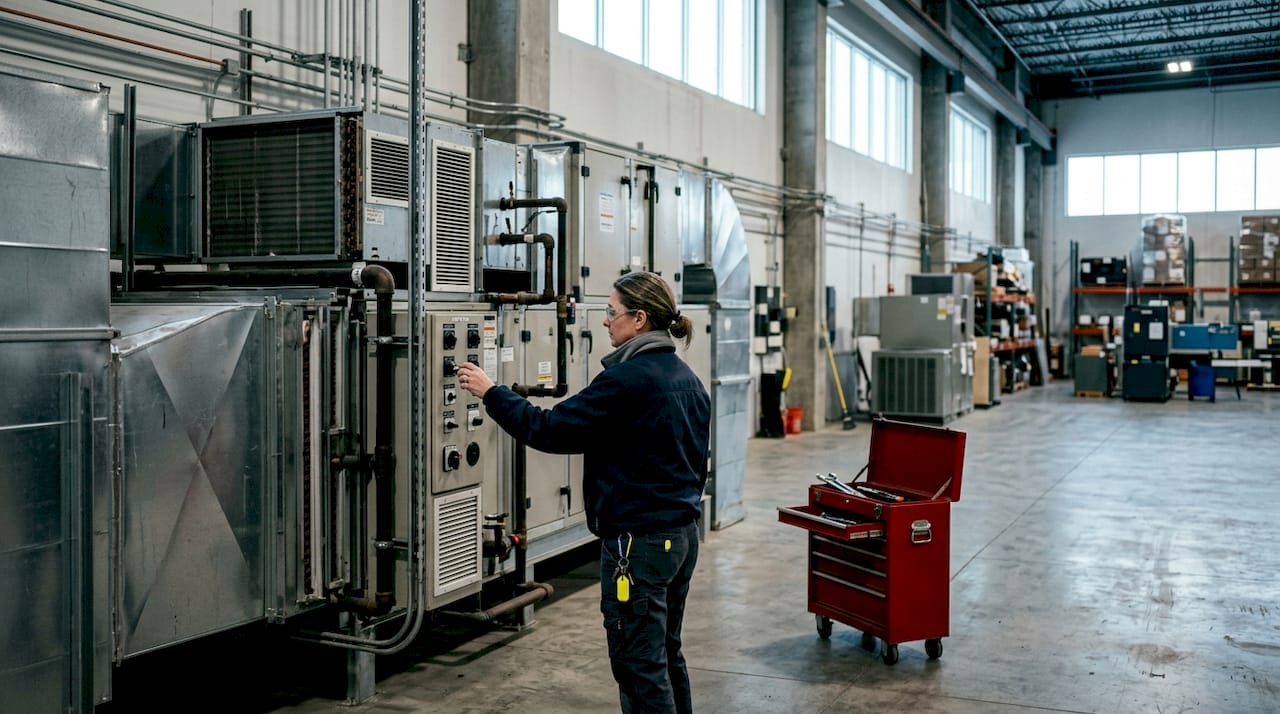
Commercial buildings bring in outside air continuously for ventilation. When economizer dampers get stuck open or an actuator fails, subzero air blasts directly onto heating coils. If water flow through those coils slows or stops, the coil freezes and bursts. Adjusting economizer damper minimum positions for winter operation, combined with regular lubrication and actuator testing, prevents this failure mode. It is one of the most overlooked steps in the winterization process for offices and large commercial properties.
Hydronic systems carry a separate risk. Glycol degrades over time, and a system filled five years ago may offer little freeze protection today. Test glycol concentration with a refractometer each fall and top up with inhibited propylene glycol to maintain protection down to -20°F or lower.
Full HVAC winterization task list:
- Test Air Handling Unit (AHU) freeze stats using freeze spray; confirm fans shut down and outside air dampers close when a freeze stat trips at 35°F
- Verify Building Automation System (BAS) sequences for holiday and reduced-occupancy schedules
- Inspect and clean heat exchangers, boilers, and rooftop unit (RTU) condensate drains; heat-tape P-traps that could freeze solid
- Check gas valve pressure on RTUs; cold weather causes utility gas pressure to fluctuate
- Replace MERV-rated filters and verify static pressure after any upgrade
- Test flame safeguard controls and low-water cutoffs on boilers
- Confirm basin heater disconnect switches on cooling towers are closed
Pro Tip: For vacant office suites or retail spaces, never set thermostats below 60°F. The thermostat on an interior wall may read fine while pipes inside an exterior wall drop below freezing. Open all interior and cabinet doors to let warm air circulate around those vulnerable spots.
Certain commercial buildings also run air conditioning in winter due to high internal heat loads from server rooms, labs, and dense occupancy. HVAC winterization in those buildings requires balancing freeze protection with simultaneous cooling demand.
Building operations and management roles during winterization
Effective winterization does not happen in October. It starts in spring. The best approach begins as soon as winter coats come off, typically in late March, with a full property assessment covering roof leaks, drainage, hardscape integrity, and irrigation heads. That timeline gives you months to schedule repairs, secure budgets, and confirm vendor contracts before the first freeze.
Facility managers carry the operational load here. Their responsibilities span planning, communication, training, and real-time monitoring.
Core operational responsibilities:
- Document everything: Map all water shutoff valve locations, post them in mechanical rooms, and distribute them to staff. Clear shutoff maps let your team act in seconds during a freeze event, not minutes.
- Run tabletop drills: Practice pipe-burst scenarios that include shutoff procedures, water cleanup, and tenant notifications. The drill reveals gaps in your plan before the emergency does.
- Confirm vendor contracts: Snow removal response times, HVAC on-call coverage, and emergency plumbing contacts should all be verified in writing before November.
- Monitor sensors actively: Set alerts for low supply air temperatures, freeze stat trips, and space temperatures approaching 40°F. Daily checks during severe cold are standard practice.
- Communicate with tenants: Share emergency procedures, thermostat policies, and space heater guidelines before the season starts. A single clear communication reduces service calls throughout winter.
- Verify emergency generator readiness: Test under load, confirm fuel levels, and check automatic transfer switches for IT rooms, security panels, and access control systems.
Having a preventive plumbing contract in place before winter gives you scheduled inspections and priority response, which matters when every plumber in the region is fielding freeze calls simultaneously.
Research-backed best practices for commercial winterization
The most effective winterization programs break the work into three waves: early fall mechanical and envelope work, pre-storm supply stocking and vendor confirmation, and daily monitoring during cold spells. That structure prevents the backlog that hits when the first freeze arrives and everything needs attention at once.
Water management deserves as much attention as temperature control. Blocking moisture entry, clearing drainage, and eliminating stagnant water that can freeze in mechanical and structural components are as critical as setting the right thermostat. Ice dams form when drainage is blocked; stagnant water in seldom-used fixtures creates both freeze risk and Legionella exposure.
Practical expert tips:
- Set minimum thermostat setpoints at or above 55°F in all occupied zones; use 60°F for vacant units with exterior wall exposure
- Open interior doors and under-sink cabinet doors in vacant spaces to circulate warm air around pipes near exterior walls
- Install Wi-Fi thermostats in vacant suites to receive alerts if temperatures drop unexpectedly
- Flush seldom-used fixtures regularly through winter to prevent stagnation
- Adjust economizer damper minimum positions before the first cold snap, not after
- Stock critical spare parts (belts, filters, glycol, fuses) before storm season; lead times stretch when demand spikes
- Keep a snow event log with dates, actions taken, and vendor records to support insurance claims and improve next year’s plan
Pro Tip: An emergency plumbing service contract locks in priority response before the season starts. When a pipe bursts at 2:00 AM in january, you want a contractor who already knows your building.
How to protect your roof and gutters before winter
Roofs and gutters are where deferred maintenance becomes expensive fast. Clearing debris from roofs, scuppers, and downspouts before temperatures drop prevents ice dams and ponding that can cause structural failure and interior leaks. A clogged drain in october is an ice dam in january.
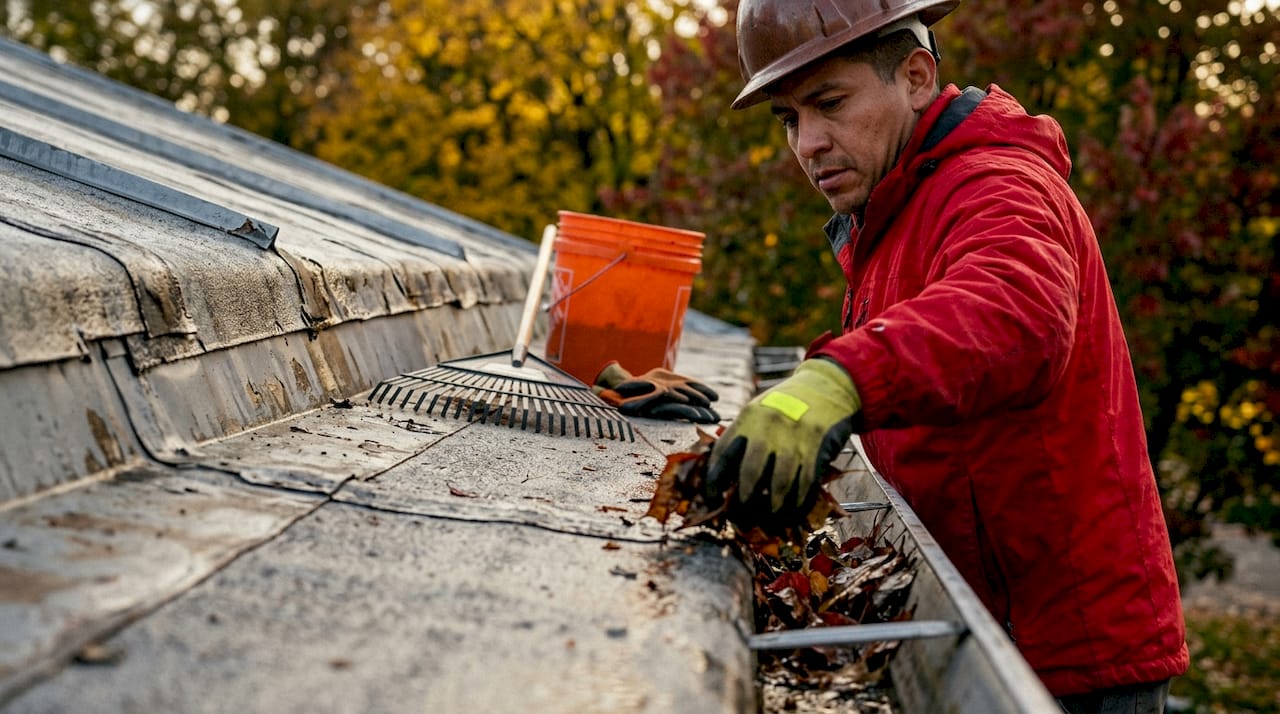
Walk the roof in early fall and look for loose flashing, open seams, blisters in the membrane, and any areas where water already ponds. Fix those before the first freeze, because ice will exploit every gap. Confirm that all downspouts direct water away from entrances and high-traffic walkways, not onto them.
For buildings in high-snow regions, ice dams signal heat escaping from the attic, melting snow that then refreezes at the eave. The fix is attic insulation, not just roof de-icing cables. Roof hatches are another common failure point: an unlatched hatch acts like a chimney, pulling heat out of the building and letting snow into the mechanical space above.
After every major storm, walk the roof (safely), verify drains are clear, and check mechanical rooms for new leaks. Close work orders within 48 hours so small issues do not compound.
Insulation and sealing techniques that actually hold heat
A tight building envelope is what makes every other winterization effort work. Your heating system fights a losing battle if cold air is pouring in through loading dock seals, roof hatch gaps, or failed caulking around windows.
Start with the exterior shell. Walk the perimeter and probe for gaps in masonry, deteriorated sealant, loose siding, and damaged flashing. Even a 1/8-inch gap can increase heating costs meaningfully through cold air infiltration. Loading dock door seals and leveler gaskets wear out quickly in warehouses and need annual replacement, not just inspection.
Inside, focus on mechanical rooms and any space near exterior walls. Wrap exposed pipes in unheated areas with foam sleeves or heat tape. Upgrade duct insulation in unconditioned spaces to meet ASHRAE 90.1 R-value requirements. Check that all RTU access panels are tightly fastened: a missing screw lets wind drive snow into the electrical cabinet, which shorts out control boards. For common area snow removal around loading docks and entrances, keeping those seals intact matters as much as the plowing itself.
Commercial building winterization checklist
This checklist covers the full scope of winter prep for facility managers. Use it to assign tasks, track completion dates, and document vendor work.
Mechanical systems
- Service boilers, furnaces, heat pumps, and RTUs; replace filters and test combustion
- Test AHU freeze stats and verify BAS sequences for winter operation
- Check glycol concentration in hydronic systems; top up to protect to -20°F
- Inspect and clear condensate drains; heat-tape vulnerable P-traps
- Verify heat trace functionality on sprinkler cabinets and exposed piping
- Test emergency generators under load; confirm fuel levels and transfer switches
Plumbing and water systems
- Insulate exposed pipes in basements, crawl spaces, and exterior walls
- Drain and shut off exterior faucets, irrigation lines, and hose bibs
- Add antifreeze to drain traps in seldom-used fixtures
- Set vacant unit thermostats to 60°F minimum; open interior and cabinet doors
- Post water shutoff maps in mechanical rooms and distribute to staff
- Review winter plumbing prep steps for any residential-use areas within the building
Envelope and exterior
- Inspect roof membrane, flashing, and scuppers; repair before freeze
- Clear gutters, downspouts, and roof drains of all debris
- Seal gaps around windows, doors, loading dock seals, and roof hatches
- Confirm downspouts direct water away from walkways and entrances
Safety and operations
- Stock ice melt, shovels, entrance mats, and wet floor signs
- Confirm snow removal vendor contracts and response time commitments; review 24/7 snow service options for multi-site properties
- Update emergency contact lists and on-call schedules
- Run a tabletop drill for pipe-burst response
- Photograph high-risk areas and log all completed work with dates and vendor names
- Review insurance policy for winter-related coverage gaps
What happens when you skip winterization
The cost of neglecting winter prep is not theoretical. A single burst sprinkler line in a warehouse can release hundreds of gallons per minute, destroying inventory, saturating drywall, and displacing tenants for weeks. Water damage from frozen and burst pipes averages $11,000 per claim across commercial properties, and that figure climbs sharply in industrial or data center environments where downtime compounds the physical damage.
Slip-and-fall incidents increase by 40% during winter months, raising workers’ compensation claims and liability exposure. Under OSHA’s General Duty Clause, ice-covered walkways are a recognized hazard, and failing to address them is a compliance violation, not just a safety concern.
HVAC failures carry their own cascade. A frozen heating coil in an air handler can shut down an entire zone. In pharmaceutical, food processing, or data center facilities, that means temperature-sensitive operations go offline. The repair itself is expensive; the regulatory and operational fallout often costs more. A single major winter incident can run three to five times the annual cost of preventive maintenance.
Energy efficiency considerations during winterization
Winterization and energy efficiency are the same project, not two separate ones. Tight seals, clean filters, and balanced ventilation reduce the load on your heating plant. Equipment running within its design parameters uses less fuel and needs fewer emergency calls.
Thermostat calibration and BAS programming for occupancy and holiday schedules are among the highest-return steps. An uncalibrated thermostat that overshoots by even a few degrees runs the heating system harder than necessary all season. Programming setback temperatures for nights, weekends, and holiday closures compounds those savings across months.
Filter condition directly affects system efficiency. A clogged filter forces the air handler to work harder, increases static pressure, and reduces airflow to occupied zones. Replacing filters at the start of heating season, and again mid-season in high-use buildings, keeps the system running at rated capacity. Upgrading to MERV 11 or higher improves indoor air quality during winter when buildings run with reduced outside air, though you should verify the static pressure impact on your specific system before upgrading.
Duct leakage is a quieter drain on efficiency. Leaky ducts in unconditioned spaces dump conditioned air into walls and ceilings instead of occupied zones, forcing the system to compensate. Sealing and insulating those ducts to ASHRAE 90.1 standards pays back over a full heating season.
Mysticvalleyservices provides plumbing and heating services across Massachusetts, with direct experience in the freeze risks that New England winters create for commercial properties. Whether you need a pre-season boiler inspection, pipe insulation work, or an emergency plumbing contract before the first cold snap, the team at Mysticvalleyservices is ready to help you get your building through winter without surprises. View available services to find the right fit for your property.
Key Takeaways
Commercial building winterization works by systematically protecting sprinkler systems, HVAC equipment, plumbing, and the building envelope before temperatures drop, with phased planning starting in early fall.
| Point | Details |
|---|---|
| Start in early fall | Begin inspections and repairs in fall to secure budgets and vendor contracts before the first freeze. |
| Vacant unit thermostat floor | Set unoccupied spaces to a minimum of 60°F and open cabinet doors to prevent hidden freeze damage. |
| Glycol protection target | Test hydronic system glycol each fall and top up to maintain freeze protection down to -20°F. |
| Three-wave task structure | Break work into early fall mechanical checks, pre-storm supply stocking, and daily cold-weather monitoring. |
| Water damage cost baseline | Frozen and burst pipe claims result in substantial costs per incident, with far higher costs in industrial settings. |